

Home»Money»Multi-currency accounts
Multi-Currency Accounts Explained (When You Need One, When You Don’t)
By  Ignas Simkus|Last updated: 12 August 2026|How we test
A multi-currency account sounds like something for currency traders. It is actually the quiet infrastructure behind cheap travel money, and half the readers of this page do not need one at all. Here is the honest sorting: what these accounts do, who they genuinely serve, and when a plain travel card already covers you.
Article Summary
- What it is: one account holding separate balances in many currencies
- Who needs one: people paid across borders, long-stayers, big-sum converters
- Who doesn’t: the two-week holidaymaker, a good travel card already converts honestly
- The real superpower: local account details in other countries
What a multi-currency account actually is
One login, many wallets: euros here, dollars there, baht for the winter, each a real balance rather than a display trick. Convert between them when you choose, at rates that are honest to the degree we covered in the money hub, mid-market plus a visible fee on the best products. The attached card then spends whichever balance matches the till, converting only when no balance does.
Price one real conversion and the category explains itself. Converting €1,000 to dollars through a legacy bank typically hides 2-3% in the exchange rate: €20-30, invisible, gone. The same conversion through a mid-market product shows the Google rate and an itemised fee: our own €500 test quote in July 2026 carried €3.87, or 0.77%, all of it on screen before confirming. Multiply that gap across a year of getting paid, converting rent money and topping up trips, and the multi-currency account stops being a fintech toy and becomes the cheapest utility you own.
The feature that changes lives: local details
The genuinely transformative part is not holding currencies, it is receiving like a local. A US routing number, a UK sort code, an EU IBAN, all attached to one account: a client in New York pays a “domestic” transfer, a marketplace pays out without international wire fees, a landlord abroad gets a local standing order. For anyone earning across borders, freelancers, remote workers, the entire laptop-visa economy, this single feature pays for the learning curve many times over.
The product landscape in one look
| July 2026 | Hold currencies | Local receiving details | Protection model |
|---|---|---|---|
| Wise | 40+ | ~10 currencies (20 incl. Swift routes) | E-money safeguarding |
| Revolut | 30+ | Partial (EU/UK focused) | Bank: €100k EEA, £120k UK since March 2026 |
| Traditional bank FX account | Usually 1-3 | Home country only | Deposit guarantee |
The pattern to notice: the products that hold the most currencies offer the least deposit protection, and vice versa. That is not a scandal, it is a design trade, and it is exactly why the hold-what-travel-needs rule below exists.
Who actually needs one
- Paid in one currency, living in another: yes, immediately, timing your conversions instead of accepting payday’s rate is real money.
- Long-stayers and slowmads: yes, holding the local currency insulates a three-month budget from rate wobble and weekend markups.
- Big one-off converters (property deposits, tuition, a car): yes, for the fee transparency alone.
- The two-week holidaymaker: honestly, no. A good travel card from our travel cards guide converts at the same honest rate on the fly; the extra wallets would just sit empty.
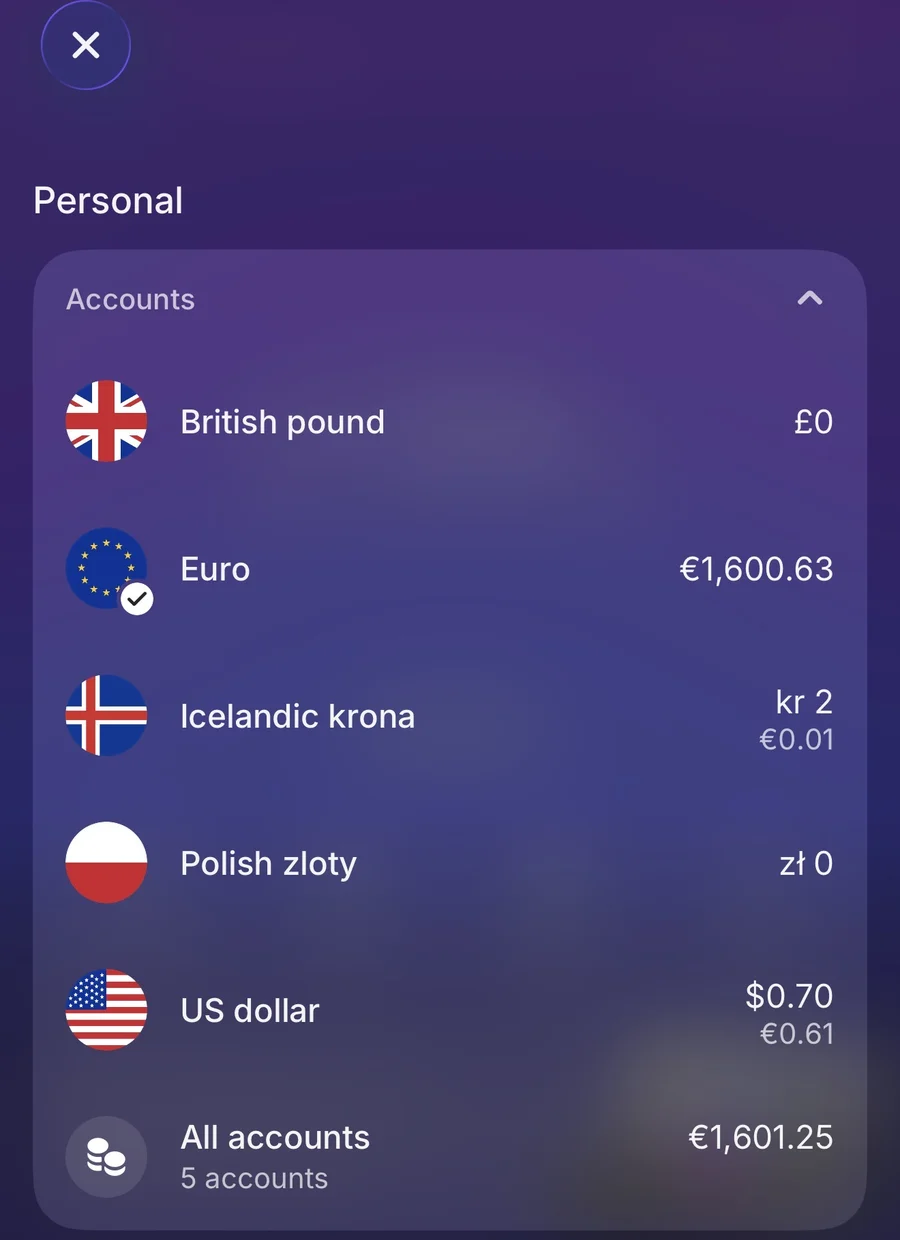
Using one well: three habits
Convert deliberately. The whole point is choosing your moment, a Friday habit if your product marks up weekends, a rate-alert habit for big sums. Keep a spending float, not a treasury. These are e-money products in most jurisdictions; deposit protection differs from a bank. The UK regulator says it plainly: if a non-bank payment provider fails, your money “won’t be protected by the Financial Services Compensation Scheme”, it is safeguarded instead, which can mean delays and haircuts in a collapse (FCA guidance). So hold what travel needs, bank what savings need. Name the wallets after jobs. Rent, winter trip, tax, the mental accounting is free and it works.
The honest bottom line
Multi-currency accounts are infrastructure, not magic: indispensable if money enters your life in more than one currency, optional if it merely leaves in one. If you have read this far and thought “that’s my situation” twice, open one this week, Wise is where I would start, per the hub’s reasoning. If not, a clean travel card and the local-currency rule already put you ahead of ninety percent of travellers.
FAQ
Do multi-currency accounts affect my taxes?
Holding currencies is not a taxable event in most places; converting can technically be, and interest-bearing balances add reporting wrinkles. Travellers rarely trigger anything; freelancers billing across borders should ask an accountant exactly once.
Can I pay bills at home from a multi-currency account?
If it issues local account details in your home currency, yes: transfers and direct debits behave like a local account. That test separates real multi-currency accounts from prepaid cards in a currency costume.
What happens to my balances when exchange rates move?
They sit in the currency you bought, so the home-currency value floats. That is the point when you are prefunding a trip, and the risk when you are hoarding. Hold what travel needs, not a speculation portfolio.