

Home»Travel Money
Travel Money: Cards, Fees and FX
By  Ignas Simkus|Last updated: 21 July 2026|How we test
Spending abroad costs more than it should for one reason: the fees are charged in places you don’t see them. Not the headline exchange rate, but the three or four percent layered underneath it. I’ve churned through more banking apps than I care to admit, hunting for the ones that support travel instead of quietly billing it; this page is what survived. Here’s where the money actually leaks, and what to set up before you fly.
The four charges, and which ones matter
The exchange-rate markup
The biggest and least visible cost. Banks rarely charge you the real interbank rate: they add a spread on top and quote you the result. Because it’s baked into the rate rather than itemised, most people never see it.
This is where the specialist accounts earn their keep: they pass through something at or near the interbank rate and charge separately, or not at all. Compare the rate you’re offered against the mid-market rate on the day (the ECB publishes daily reference rates), and the gap is what you’re really paying.
The foreign transaction fee
A flat percentage some cards add on any non-domestic transaction, typically around 2–3%. It’s the easiest fee to eliminate (plenty of cards simply don’t charge it) and the easiest to forget you’re paying, because it appears on your statement weeks later.
Dynamic currency conversion
The one that’s an outright trap. At a foreign card terminal or ATM you’ll be asked whether to be charged in your home currency or the local one. Choosing your home currency lets the merchant’s payment processor set the exchange rate, and that rate is reliably worse than your bank’s. The full DCC guide shows the real ATM screens, the worked maths and the dispute path.
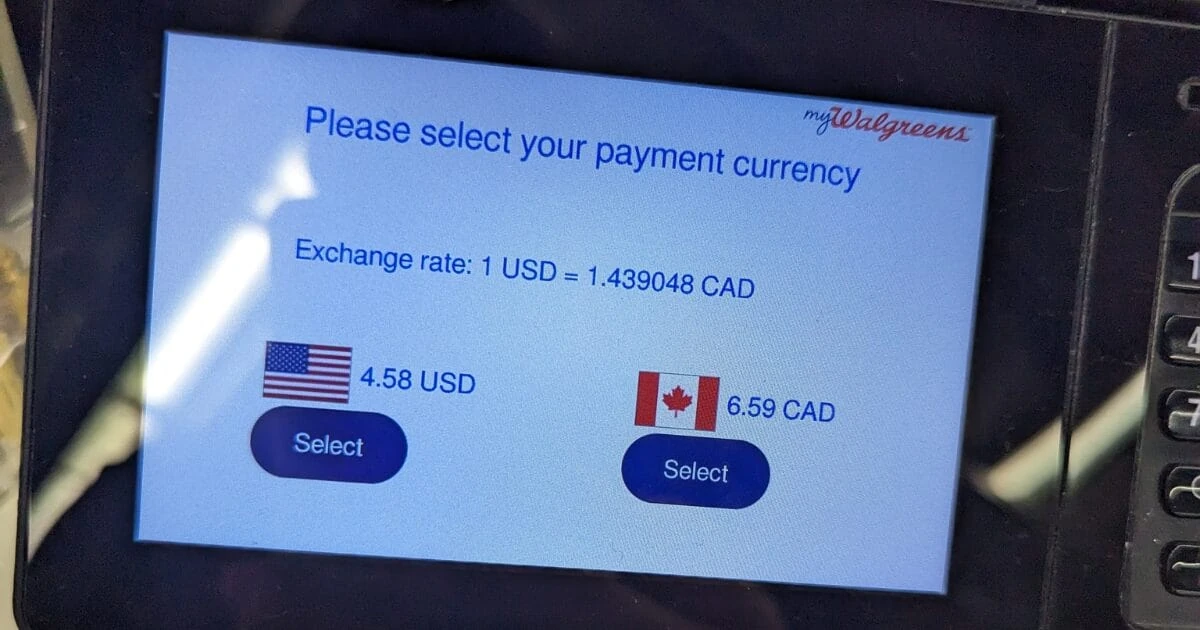
Always choose the local currency. Always. This single habit saves more than most card-switching decisions, and it costs nothing.
ATM withdrawal fees
Two charges can stack: your own bank’s fee, and the machine operator’s. Some travel accounts refund a monthly allowance of the first; nobody refunds the second. Bank-operated ATMs generally charge less than the standalone machines in tourist areas and airports.
What to actually set up
The practical answer for most travellers is two cards from different networks, plus a way to hold currency. The ranked lineup, with July 2026 fee tables, is the travel-cards guide.
- A no-foreign-fee card as your main spend. Ideally a credit card, for the purchase protection.
- A second card on a different network, kept somewhere separate. Visa and Mastercard acceptance genuinely differs by country, and cards do get blocked, swallowed, and lost.
- A multi-currency account if you travel often or get paid in more than one currency. You can convert when the rate suits rather than at the till.
- Some local cash. Card acceptance is near-universal in some countries and patchy in others. Small amounts, from a bank ATM, on arrival.
One habit worth more than any product choice: tell your bank you’re travelling, or set it in the app. A blocked card on day one is a bigger problem than any fee on this page.
Where people get it wrong
Chasing rewards over fees. A card earning 2% back while charging a 3% foreign transaction fee is losing money on every purchase abroad. Fee structure first, rewards second.
Converting at the airport. Airport bureaux have the worst rates you will encounter, because they’re selling convenience to people with no alternative. Withdraw from a bank ATM instead.
Relying on a single card. It’s the failure mode that turns an inconvenience into a genuine problem, and it’s entirely preventable.
Who we cover
- Revolut: the all-rounder; spending, currency holding, and travel extras in one app
- Wise: the clearest pricing in the category, and the better choice for actual transfers
Both publish full fee schedules, and both change them. Fee structures, weekend surcharges, and monthly fair-usage limits move often enough that any figure worth acting on should be checked against the provider’s live schedule, so we date every fee we quote and link to the source.
Our pick: Wise. You get the real mid-market rate with a clearly stated, upfront fee (full Wise review), a small fixed charge plus a variable percentage from from roughly 0.47% (July 2026) depending on the route, no weekend surcharge, and holdings in more than 40 currencies, which makes it the card you never have to think about. Revolut edges ahead for weekday-only card spending under its plan limits and for app extras like budgeting and premium travel perks, and that is exactly when we would switch. The head-to-head is on our travel tech stack.
Travel money guides
- Always Pay in Local Currency: The DCC Trap Explained: Dynamic currency conversion quietly adds 4-8% to card payments abroad. What the home-currency button…
- Best Travel Cards (2026): No-Fee Spending, Real Exchange Rates: The travel cards that stop fees at the source: Revolut, Wise, N26 and Monzo compared on FX rates, weekend…
- Card Declined Abroad? Fix It From the Queue: A declined card abroad is almost always one of five fixable causes. The two-minute triage that gets you…
- How to Avoid ATM Fees Abroad (Without Carrying a Brick of Cash): ATM fees abroad stack three layers deep: operator fee, DCC markup, your own bank’s cut. The…
- Multi-Currency Accounts Explained (When You Need One, When You Don’t): Multi-currency accounts hold and convert money in dozens of currencies at honest rates. Who actually needs…
- Revolut Review for Travellers (2026): My Daily Card, Honestly: Revolut is the most complete travel money app: real rates on weekdays, travel mode, instant controls, an…
- Revolut vs Wise for Travel (2026): The Weekend Decides It: Revolut and Wise solve travel money differently: feature depth vs rate purity. Both live in my pocket,…
- Wise Review for Travellers (2026): Mid-Market Rate, No Games: Wise gives you the exchange rate you see on Google plus a small upfront fee, in 40+ currencies. Where it…
More guides land through August.
The rest of the stack
Cards are one piece. You’ll also want an eSIM so your banking app works on arrival, a VPN for the banks that block foreign IPs outright, and insurance for the costs no card protects against. The whole setup is on our travel tech stack.
Nothing here is financial advice; it’s a description of how the charges work. Our sourcing standards are in how we test.