

Home»Insurance»What insurance covers
What Travel Insurance Actually Covers (and the Fine Print That Decides It)
By  Ignas Simkus|Last updated: 24 August 2026|How we test
I buy travel insurance the way I read contracts: occasionally, deliberately, and with the exclusions first. Most disappointment with insurance is a mismatch between what people assume the envelope contains and what the policy wording says. Here is the honest inventory.
Article Summary
- The four products: emergency medical, trip cancellation, belongings, liability
- The one that matters: medical + evacuation, the six-figure risk
- Where claims die: exclusions, alcohol, activities, licenses, pre-existing conditions
- The habit: read the exclusions section before paying, not after the accident
Four products wearing one name
- Emergency medical and evacuation pays foreign hospital bills and, at the catastrophic end, the air ambulance home, the genuinely uninsurable-out-of-pocket risk and the entire reason this category exists.
- Trip cancellation/interruption refunds prepaid costs when listed reasons (illness, death in family, some disruptions) kill the trip.
- Belongings pays depreciated sums for lost or stolen kit, with per-item caps that surprise laptop owners.
- Personal liability covers you injuring someone or their property.
Policies weight these wildly differently, which is why two “$100 policies” are rarely the same product.
Medical is the product; the rest is packaging
A broken leg in Thailand or an appendectomy in the US runs from thousands to six figures; evacuation multiplies it. This is the module to size first: coverage limits vary from $250,000 on budget nomad policies (SafetyWing Essential‘s current wording, with a $250 deductible) to $10 million on premium per-trip ones (Heymondo‘s standard plans), and deductibles change the everyday claim experience. Our insurance hub frames the whole vertical this way, luggage lines make the brochure, medical limits make the decision.
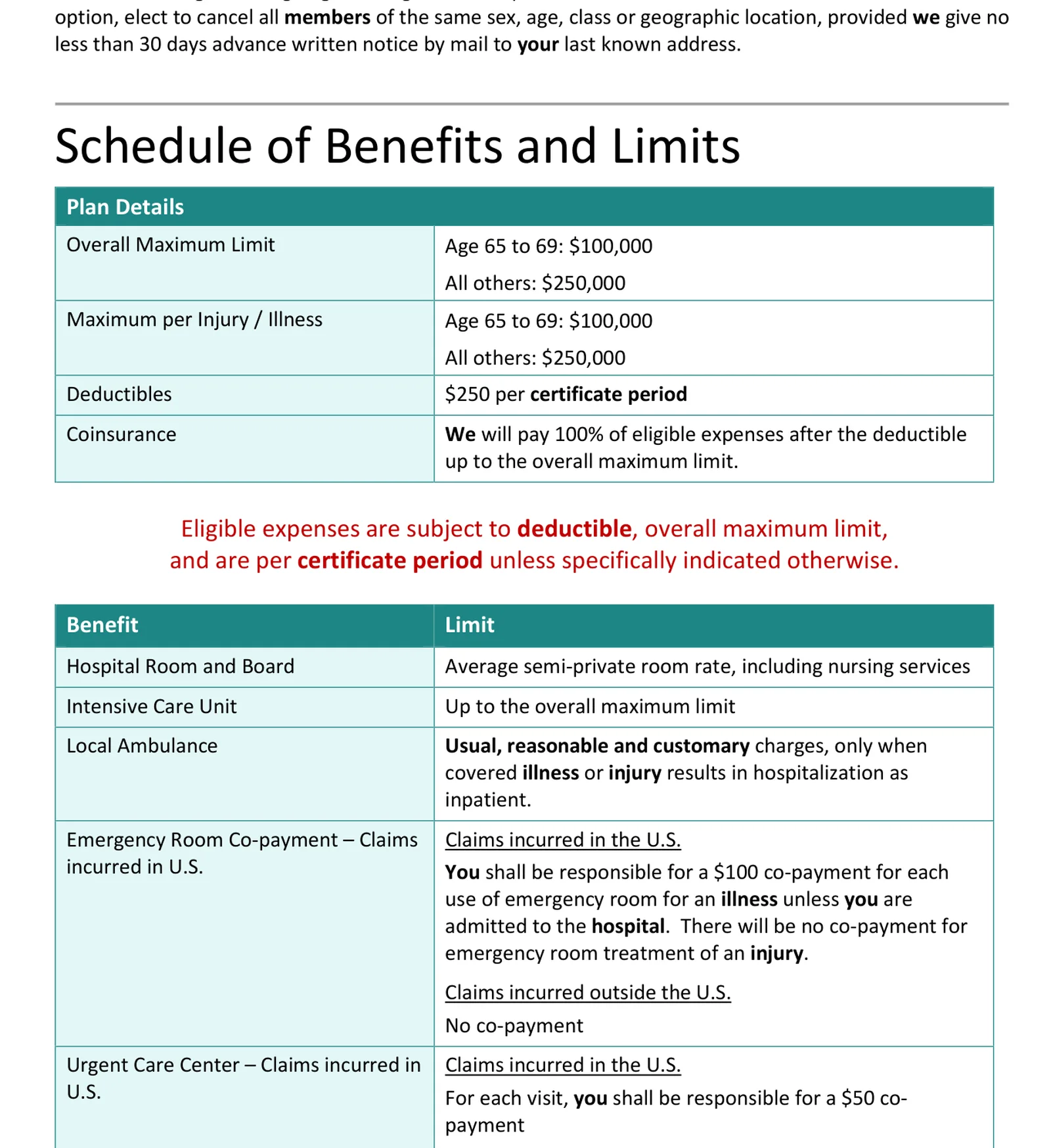
To make the ranges concrete, here is where real 2026 products sit, from their own published wordings:
| Benefit | Budget subscription (SafetyWing Essential) | Premium per-trip (Heymondo standard) |
|---|---|---|
| Medical maximum | $250,000 ($100,000 at ages 65-69) | Up to $10,000,000 |
| Deductible | $250 per period | Zero-deductible options |
| Evacuation | $100,000 lifetime, separate pot | Repatriation/early return to $500,000 |
| Baggage | $3,000/period, $500 per item | Higher lines, per-item caps still apply |
Neither column is “right”. They are different bets: a monthly subscription priced for open-ended travel versus a per-trip premium priced for certainty. The US State Department keeps a blunt page on why the medical column matters at all: most domestic health plans, it notes, do not follow you abroad (travel.state.gov on overseas coverage).
Where claims actually die
The exclusions section, always. The recurring killers: alcohol (injuries while intoxicated are broadly excluded, and blood tests happen), activities (that parasail was an “adventure sport” needing an add-on), licenses (the scooter clause, so decisive in Southeast Asia it gets our own guide), pre-existing conditions (undeclared ones void related claims), and timing (cancellation cover generally must be bought before the thing being cancelled becomes likely). None of this is hidden; it is on the pages nobody reads. The screenshot of exclusions on our hub came from a real policy, five minutes with yours is the highest-value reading in travel.
Two clauses deserve their own paragraph. Pre-existing conditions: planned treatment is never covered, but some wordings cover an acute onset of an otherwise stable condition; SafetyWing’s current Description of Coverage, for instance, covers acute flare-ups up to the overall maximum with a reduced $25,000 evacuation cap. If a condition travels with you, this clause is the first page you read. Timing: cancellation cover protects bookings made after the policy starts, and most policies bought mid-trip carry waiting periods precisely so nobody buys cover in the ambulance. The cheapest moment to buy is the day you book flights, and it is not close.
What it doesn’t do (by design)
It is not health insurance for routine care, GP visits, prescriptions, dentistry are excluded unless a nomad-style policy adds them. It does not cover “I changed my mind” (that is a separate cancel-for-any-reason add-on at real cost). Belongings caps mean the MacBook needs either a rider or gear-specific cover. And claims are reimbursement-shaped: you pay, document, and recover, except large hospital events, where insurers pay direct. Keep receipts, photograph everything, file fast.
How to read a policy in ten minutes
- Minute 1-3: the schedule of benefits. One table, like the one pictured above, decides most claims: medical maximum, deductible, evacuation, per-item caps. If the medical number is five figures, stop reading and shop on.
- Minute 4-6: the exclusions list. Scan for your actual trip: scooters, diving, trekking altitude limits, alcohol wording. Named-activity lists are honest; vague “hazardous activities” phrasing deserves a support question in writing.
- Minute 7-8: conditions on the cover you care about. Licence-and-helmet clauses, receipts requirements for baggage, per-hour thresholds on delay payouts.
- Minute 9-10: the claims section. Notification deadlines and documentation lists. Photograph everything on the day; every insurer behaves better with paper.
Choosing without a spreadsheet
Match the policy to the trip’s actual risk: a city week needs medical + cancellation and little else; a scooter-and-islands month needs the activity add-ons and the license fine print; a nomad year needs the subscription products with routine-care options. The named products we cover, SafetyWing, Heymondo, Genki, split exactly along those lines, and the hub maps who fits whom; the nomad case now has a ranked lineup of its own in best travel insurance for digital nomads. Whatever you pick: exclusions first, limits second, price last. The premium is the cheapest part of every policy you ever claim on.
FAQ
Does travel insurance cover missed flights?
Missed because you overslept, no. Missed connections caused by covered delays, often, through the delay and interruption modules with their per-hour thresholds and receipt requirements. The distinction is always who caused the miss.
Are pre-existing conditions ever covered?
Some policies cover acute flare-ups of otherwise stable conditions, with their own sub-limits; planned or expected treatment never is. If a condition matters to you, that clause is the first page to read, not the last.
Is the travel insurance on my credit card enough?
Premium cards bundle genuine cancellation and delay cover, but their medical ceilings are routinely thin against US bills or an evacuation. Read the medical number: if it is five figures, you are holding a supplement, not a policy.