


Home»Insurance»Pre-existing conditions
Pre-Existing Conditions: Declare Everything (Here’s Why)
By  Ignas Simkus|Last updated: 29 September 2026|How we test
I buy travel insurance per trip, when an itinerary gets intensive enough to deserve it, and the medical questionnaire is the section I slow down for. It is the one part of the purchase where a rushed answer can quietly cancel the entire product. Here is what counts as pre-existing, and how to buy well when your medical history is not a blank page.
Article Summary
- What counts: more than diagnoses. Lookback windows can reach two years and catch conditions you did not know you had
- The risk: an undeclared condition found in your medical records gives the insurer grounds to refuse claims connected to it
- The middle ground: acute-onset cover pays for sudden flare-ups of disclosed conditions; SafetyWing’s wording caps evacuation for those claims at $25,000
- The habit: answer the screening literally, get the decision in writing, pack the prescription paperwork, and re-check the wording when your health changes
What insurers count as pre-existing (more than you’d guess)
The everyday meaning of pre-existing is “a serious diagnosis I live with”. The contractual meaning is wider. Policies define it through a lookback window: any condition that existed, produced symptoms, or earned you advice, treatment or a prescription within a set period before the policy started. How far back that window reaches is the wording’s choice. Genki’s Traveler policy looks at the one year before cover starts (September 2026, per its product page); the wording behind SafetyWing’s Nomad Insurance reaches back two.
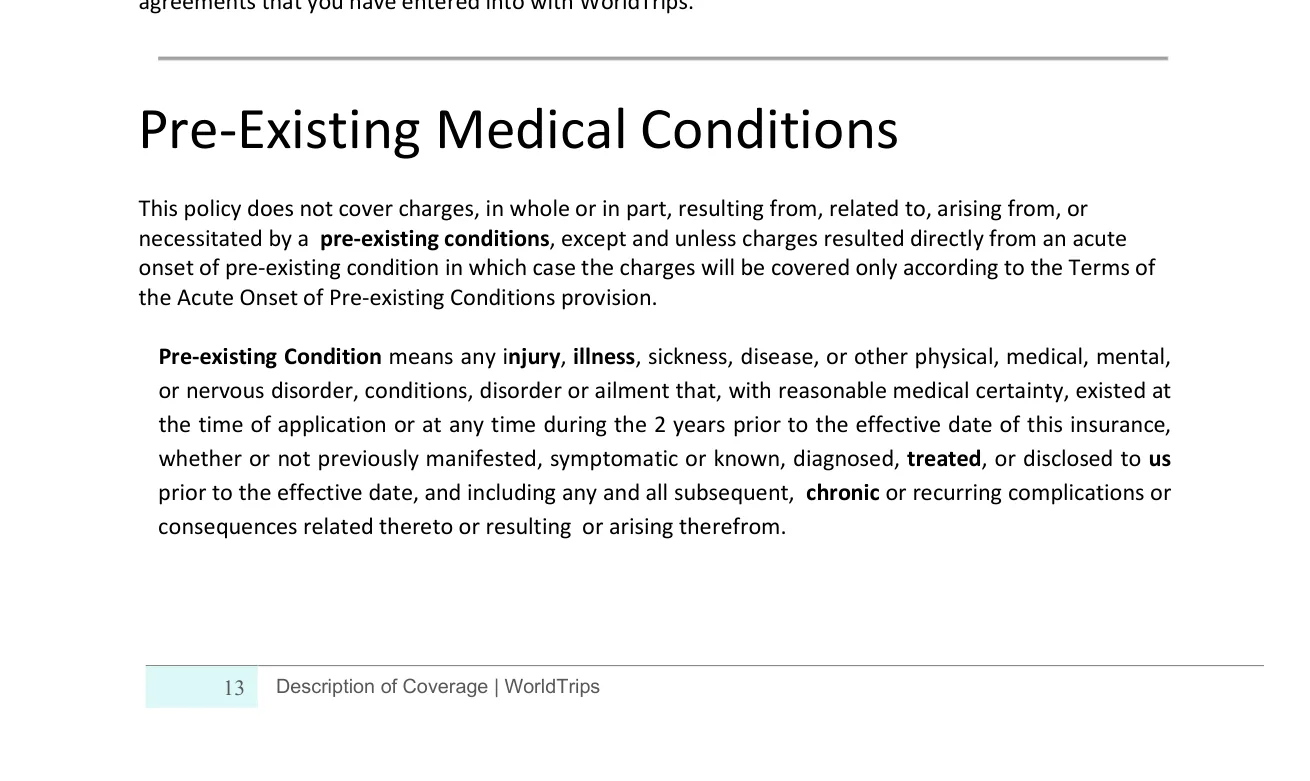
SafetyWing’s version shows how far the net stretches. The WorldTrips Description of Coverage defines a pre-existing condition as anything that existed at any point in the two years before the policy took effect, “whether or not previously manifested, symptomatic or known” (September 2026). Read that clause slowly. A condition nobody had diagnosed yet can still count, if a doctor could later say with reasonable medical certainty that it was already there.
UK-style policies run the same logic through a medical screening instead of a fixed window: a questionnaire whose answers become part of the contract. The insurer prices what you tell it, and holds you to what you did not.
Why you declare everything, including the boring stuff
The logic behind declare-everything is mechanical. When a medical claim lands, the insurer requests your records; an undisclosed condition found there gives grounds to refuse any claim connected to it. Some wordings go further and treat the policy as bought on false information, voiding cover from the start. In those wordings, the asthma you forgot can decide the fate of your stolen-luggage claim.
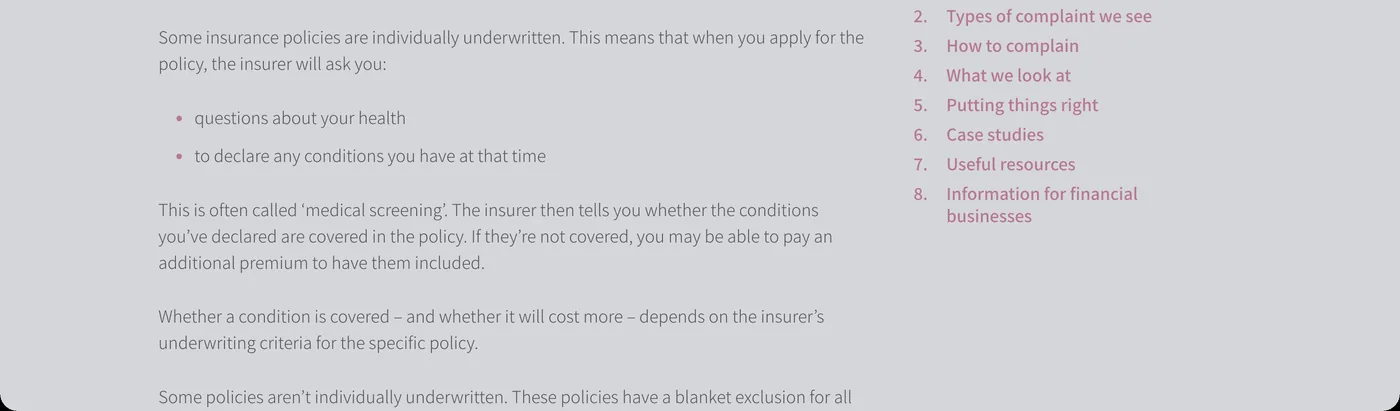
The UK Financial Ombudsman Service, which referees these disputes, splits travel policies into two families in its guidance on pre-existing medical conditions (checked September 2026): individually underwritten policies, which run a medical screening and then tell you whether a declared condition is covered, sometimes for an additional premium; and policies with no screening, which exclude any claim caused by or related to a pre-existing condition. In a non-disclosure dispute, the ombudsman checks whether a screening happened and whether the customer gave it all the relevant information, then weighs a deliberate misrepresentation differently from a mistake.
None of this is meant to frighten anyone; insurers are not laying traps. Screening exists so risk can be priced, and a declared condition gets you a decision in writing before you fly. Policies mostly fail for mundane, self-inflicted reasons, and undeclared conditions sit right next to the scooter clause on that list.
The form-filling rule I follow: if it put you in front of a doctor or onto a prescription inside the lookback window, it goes on the form. Whether it matters is the insurer’s judgement, and you want that judgement recorded before departure, not argued about after a claim.
Acute onset, explained plainly
Between “fully covered” and “excluded” sits a clause built for long-term travellers: acute onset of a pre-existing condition. It covers the sudden, unexpected flare-up of a condition you disclosed and reasonably believed was under control. Not every long-stay policy offers this middle ground: Genki’s Traveler plan excludes pre-existing conditions outright, per its product page (September 2026). Where the clause exists, the fine print decides what it is worth.
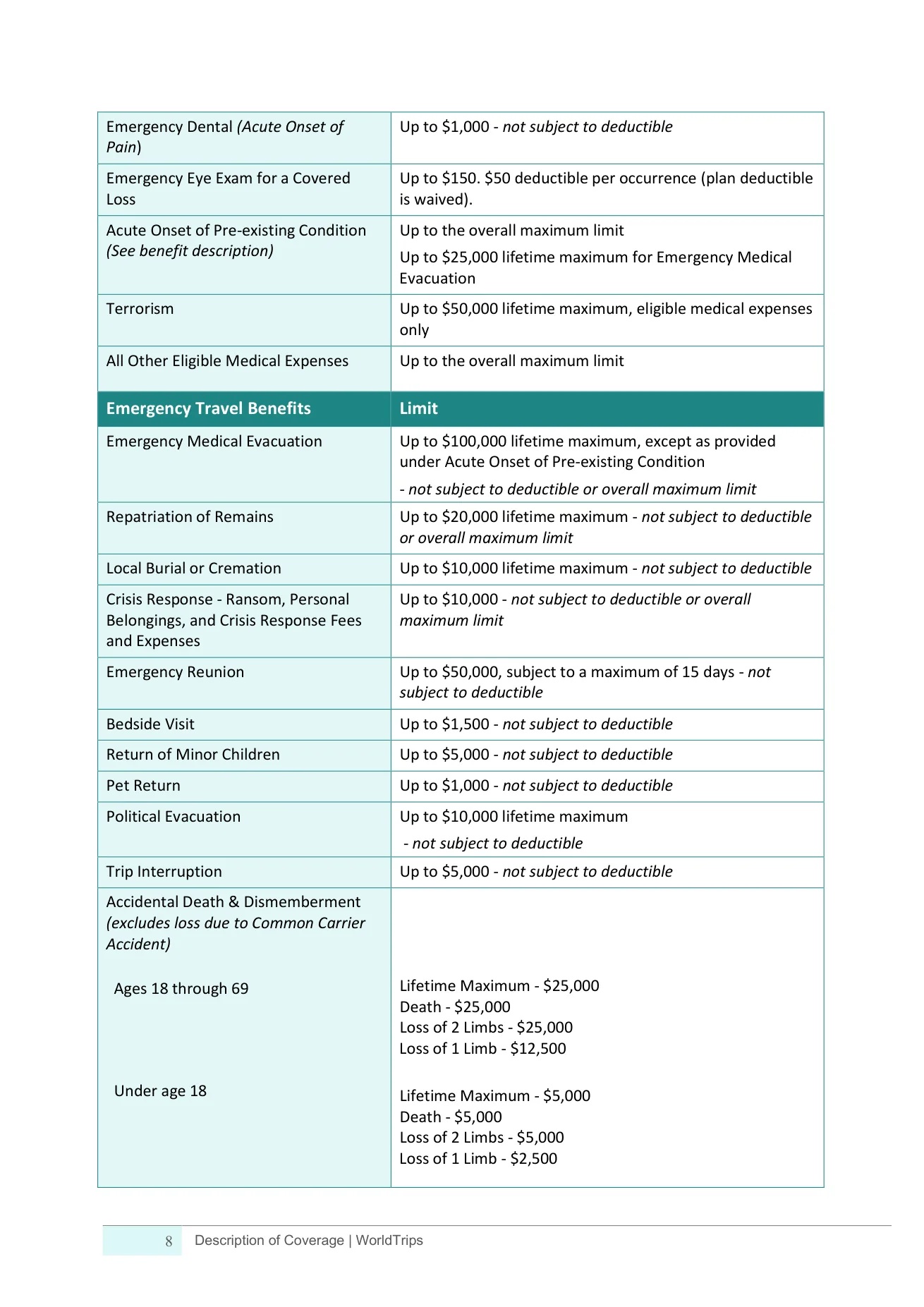
SafetyWing is the concrete example, per the same Description of Coverage (September 2026). The flare-up must be sudden, unexpected, short in duration and in need of urgent care; chronic and congenital conditions never qualify, and neither does anything that worsens gradually. You must get treatment within 24 hours, be under 80, be outside your home country, and not be travelling against medical advice or to obtain treatment. Clear all of that and eligible expenses are paid up to the plan’s overall maximum: $250,000 on Essential, or $100,000 at ages 65 to 69. The detail people miss is the evacuation carve-out: evacuation triggered by an acute onset is capped at $25,000, a quarter of the $100,000 limit that applies otherwise. If your health history is complicated and your route is remote, that gap belongs in your planning. The full teardown lives in our SafetyWing review.
Notice what the clause skips: routine management of a condition you knew needed care, and a deterioration you watched coming. It insures surprise, nothing else.
What “stable” means, in writing
A policy that agrees to cover a declared condition can attach a test of its own: the cover holds only while the condition stays “stable”. Each wording defines stable for itself. Expect ingredients like a set stretch before departure with no new symptoms, no new treatment, no medication or dosage changes, no hospital admissions, and no investigations you are still waiting on; even a routine dosage tweak can restart the clock under some definitions. Read the definition in the policy you are actually buying, because the insurer will.
Wordings also differ once a condition is in play. Heymondo’s per-trip plans carry medical limits up to $10 million (September 2026, per its plan pages); the wording behind that number gets a full walkthrough in our Heymondo review, and the broader map of what any policy pays for is in what travel insurance covers.
Policy terms and limits last verified September 2026.
Five questions to ask before you pay
Every wording answers these somewhere. Finding the answers before you pay is the entire skill of buying this product.
| Ask | What the answer tells you |
|---|---|
| How far back does the lookback window reach? | Whether that appointment from 18 months ago needs declaring |
| Is my condition covered, excluded, or covered only as acute onset? | Three different products at the same price; get the answer in writing |
| What does “stable” mean in this wording? | Whether a dosage change or pending referral resets your cover |
| Is lost or stolen medication a claimable expense? | Whether an emergency pharmacy bill abroad lands on you or the insurer |
| Is the evacuation limit lower for pre-existing conditions? | SafetyWing-style carve-outs matter most on remote itineraries |
Travelling with medication: the paperwork half
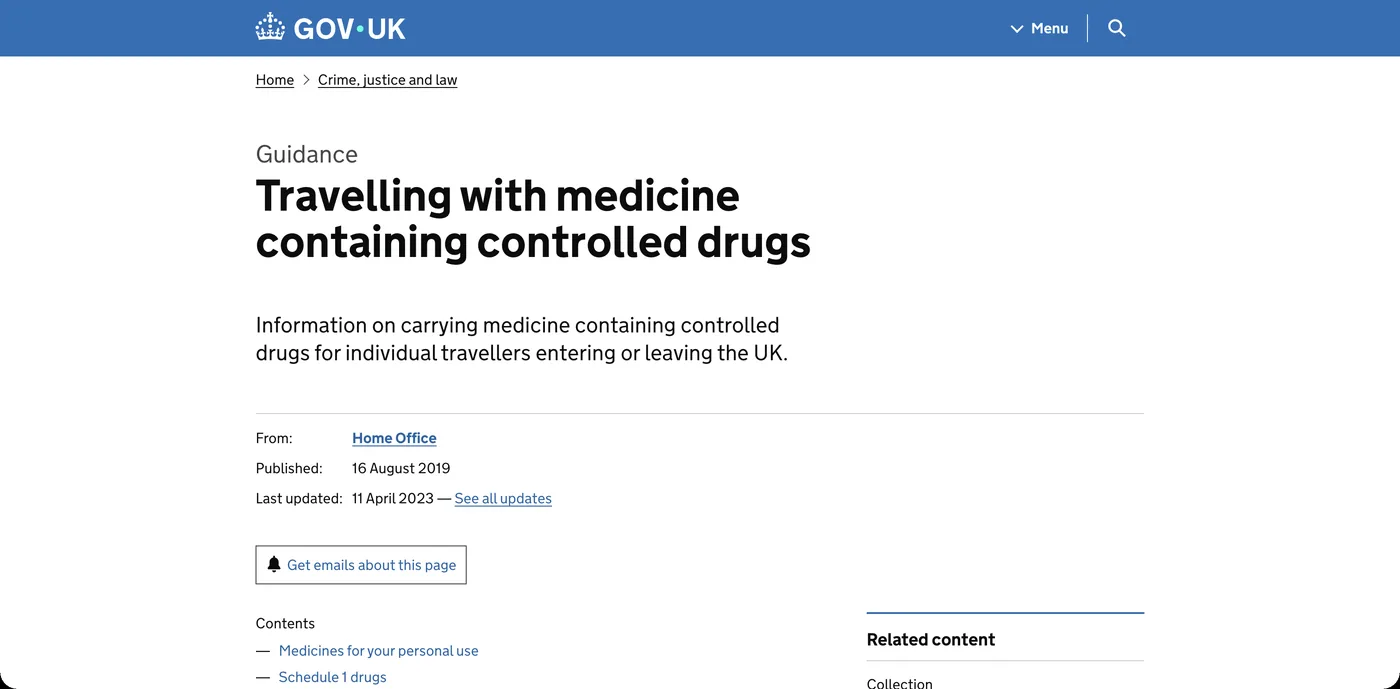
Declaring the condition is half the job. The other half is moving its medication across borders without drama. For UK travellers carrying medicine that contains controlled drugs, GOV.UK’s guidance says to carry a letter from your prescriber with your name, each medicine with its doses, strength and frequency, and the prescriber’s signature and professional registration details (September 2026). Carrying more than a 3-month supply needs a personal licence, which the Home Office treats as an exceptional-circumstances request rather than routine paperwork. The same guidance adds that other countries set their own import laws for prescription medicine, so check with the destination’s embassy before you travel.
The unglamorous habits that survive contact with airports: medication in hand luggage rather than the hold, original packaging, the prescription photographed and backed up, and the prescriber’s letter kept with your passport. It is dull paperwork until the day someone at a border asks for it.
FAQ
Do I have to declare a condition I no longer take medication for?
Check the lookback window or the screening questions on the policy you are buying. If your last symptoms and appointments both sit outside the period the wording asks about, it generally does not need declaring. If anything falls inside the window, declare it: relevance is the insurer’s call, and over-disclosure carries no penalty.
Will declaring a pre-existing condition make my insurance more expensive?
It can, but declaring does not automatically raise the price. After a screening the insurer either covers the condition, occasionally for an added premium, or excludes it while the rest of the policy stands. Either outcome beats staying quiet, because non-disclosure can put every claim on the policy at risk rather than only the ones touching that condition.
What does “stable” mean for a pre-existing condition?
Broadly: a defined period before departure with no new symptoms, no changes to treatment or dosage, no hospital admissions, and no test results still pending. Each insurer sets its own period and its own list, so the definition section of your specific wording is the only version that counts.