


Does Travel Insurance Cover Missed Flights? (Usually Not How You Think)
By  Ignas Simkus|Last updated: 27 September 2026|How we test
Three different events hide inside the phrase “missed flight”, and only one of them is reliably insurable. Working out which one happened to you decides whether you collect nothing, a receipts-based payout, or cash from the airline itself.
Article Summary
- You were late: oversleeping, traffic and tight self-made connections are yours to absorb, barring a narrow “missed departure” benefit on some UK policies
- A covered delay killed the connection: trip delay sections reimburse the stranding itself, once the policy’s own trigger is met
- The airline caused it: EU261/UK261 compensation and the US refund rule sit ahead of any insurance claim
- Either way: photograph the board, keep the receipts, and file the claims in the right order
Policy figures and passenger-rights amounts last verified September 2026.
Three ways to miss a flight, three different answers
Ask an insurer whether travel insurance covers missed flights and the accurate answer is a question back: whose fault was it? Every miss sorts into one of three buckets by that answer, and the bucket decides who, if anyone, is paying.
I buy cover per trip when an itinerary gets intensive, and I read the wording before paying. This three-way split is the second thing I check, right after the medical limits we walk through in what travel insurance covers.
Scenario one: you missed it, and nobody pays
Overslept. Or you misjudged the taxi, or read 19:00 as 9pm on the departure board. None of that is an insured event. Travel insurance covers listed perils, and being late for reasons within your control does not appear on any list I have read.
A few wordings, mostly UK-market ones, sell a separate “missed departure” benefit for named causes on the way to the airport: the car breaks down, the train is cancelled, a motorway closes. If your policy carries it, the section names the qualifying causes and demands paperwork, a breakdown callout report or a letter from the train operator. The default position across the market is plainer: getting to the gate on time is a risk you carry yourself.
Scenario two: a covered delay wrecked the connection
This is where insurance earns its premium. The first flight lands late, the connection is gone, and you are suddenly shopping for a hotel night you never planned. Policies handle this under trip delay or missed connection sections, and two things decide the outcome: the trigger that starts the benefit, and the cap on what it pays. Here is how three current wordings compare, with every figure taken from the brand’s own published pages in September 2026:
| Policy | What has to happen | What it pays |
|---|---|---|
| SafetyWing Nomad Insurance Essential | A delay forcing an unplanned overnight stay | $60 toward the overnight costs for a delay of 3 to 8 hours, $150 past 8 hours, per its product page |
| Heymondo per-trip plans | Arriving later than planned because your transport was delayed, or missing a confirmed connection because the first flight landed late | Accommodation, meals and a replacement ticket where needed, inside a $1,500 travel disruption cap |
| Genki Traveler | No trigger exists: flight delays are excluded outright, along with trip cancellation and interruption | Nothing; Traveler is medical-first cover |
Notice what the first two have in common: neither pays for inconvenience. SafetyWing’s tiers unlock only when the delay strands you overnight, Heymondo reimburses costs you can evidence, and a ruined evening with no receipts collects nothing anywhere.
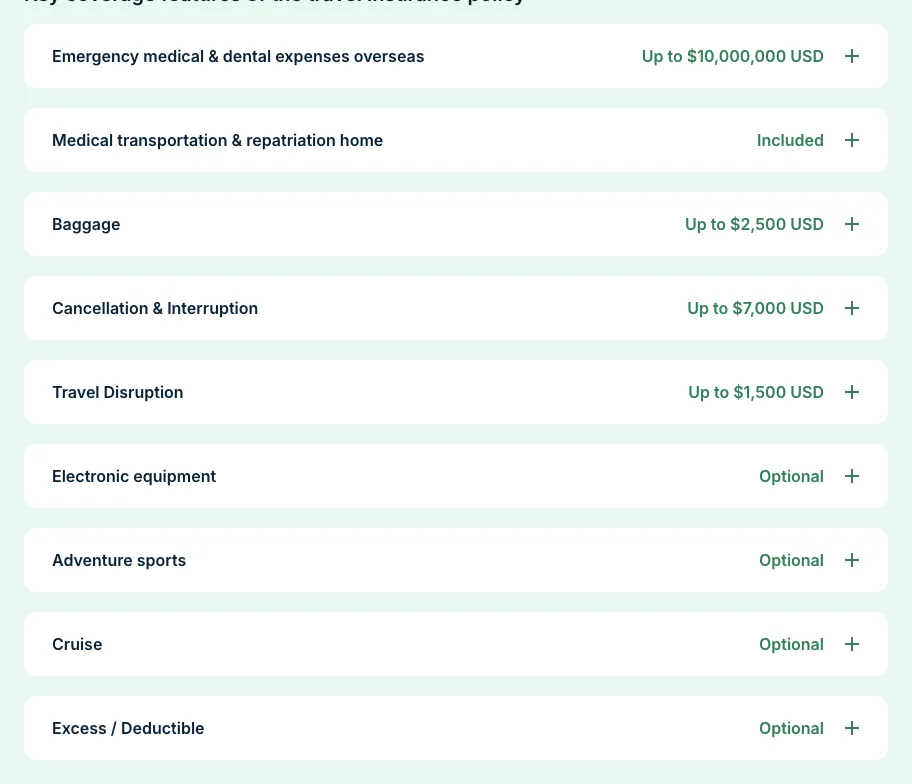
Two conditions sink most of these claims. First, the cause of the delay has to be covered in its own right: weather, mechanical failure, a strike, whatever list your wording carries. Second, the connection has to be realistic on paper, which normally means the whole journey on one booking. Book two separate tickets with a tight self-transfer gap and most insurers will call the miss a planning decision, not a peril. Those two clauses matter more than the headline cap, so read them before you look at the price.
Scenario three: the airline did it, so the airline pays first
Most missed-flight articles skip this part. When the airline causes the disruption on a European itinerary, insurance pays second. EU Regulation 261/2004 covers flights departing an EU airport on any airline, plus flights into the EU on an EU airline. Arrive at your final destination three hours late or more and the airline owes fixed cash compensation, unless it proves extraordinary circumstances such as severe weather or air traffic control decisions. Most technical faults do not qualify. The tiers, per the European Commission’s Your Europe passenger-rights pages (September 2026):
| Flight distance | EU261 compensation |
|---|---|
| 1,500 km or less | €250 |
| Over 1,500 km within the EU, and 1,500 to 3,500 km otherwise | €400 |
| Over 3,500 km | €600 |
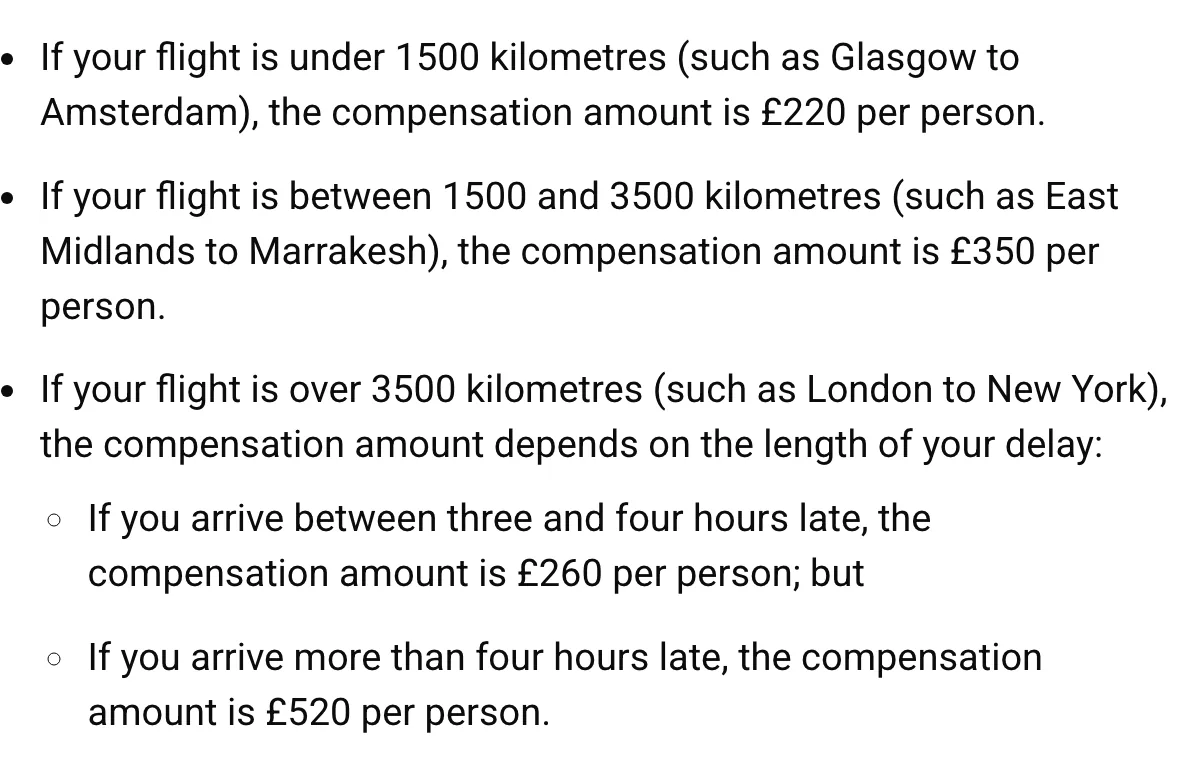
Care starts earlier than compensation: meals, refreshments and communications after two hours on short flights, three hours on mid-range, four on long-haul, plus a hotel and transfers when the delay rolls into the next day. The UK kept a mirror scheme after Brexit, commonly called UK261, with the tiers restated in sterling at £220 and £350, and long-haul paying £260 when you arrive 3 to 4 hours late, £520 only past 4 hours, per the UK Civil Aviation Authority (September 2026).
The US has no compensation scheme, but it has a hard refund rule: a cancellation or a significant change, defined by the Department of Transportation as three hours or more domestic and six international, entitles you to a cash refund if you choose not to travel, paid to your card within 7 business days (DOT refund rules, September 2026). That is your money back rather than extra compensation, but it is owed automatically and on a deadline.
The interplay decides the claim strategy. Wordings routinely exclude costs another party is legally obliged to cover, so the hotel the airline must provide under EU261 stays on the airline’s bill; submit it to your insurer and it comes straight back declined. The fixed EU261 payment works differently: it compensates the disruption itself and sits alongside a receipts-based insurance claim. Send the airline its legal obligations, send the insurer the covered remainder, and never submit the same receipt twice.
Document it while it happens
Delay claims are built at the gate while the disruption is still on the board, and the whole routine takes about ten minutes:
- Photograph the departure board: flight number, “delayed” or “cancelled” status, and the clock in one frame
- Keep the paper trail: boarding passes, the disruption notification from the app, rebooking confirmations
- Ask the desk for written confirmation of the delay and its cause; insurers ask for exactly this letter
- Save every receipt: the meal, the taxi, the hotel night, the toothbrush. Reimbursement policies pay against paper, and reasonable spending only
- File the airline claim first, then the insurance claim, and reference each in the other
That folder of phone photos is what gets a claim paid instead of argued about. The wider map of the vertical, which policy shape fits which traveller, lives on our insurance hub.
FAQ
Does travel insurance pay if I overslept and missed my flight?
No. Mainstream policies respond to listed perils, and your own timekeeping is not one of them. The exception to hunt for is a “missed departure” section covering named causes on the way to the airport, such as a vehicle breakdown or a cancelled train, and it pays only with documented proof of that cause.
Are missed connections on two separate tickets covered?
Usually not. Most wordings expect the whole journey on one booking, so the second airline owes you nothing and the insurer treats a self-booked tight connection as your planning risk. If you fly split tickets, leave a long buffer and check for missed connection cover that names self-transfers.
Can I get EU261 compensation and an insurance payout for the same delay?
You can hold both, because they pay for different things. EU261 compensation is a fixed sum for the disruption itself, while insurance reimburses documented costs the airline was not obliged to cover. What you cannot do is recover the same expense twice, and most policies exclude costs the airline is legally required to pay.