

Best Travel Cards (2026): No-Fee Spending, Real Exchange Rates
By  Ignas Simkus|Last updated: 3 September 2026|How we test
I have churned through more banking apps than I care to admit, and the shortlist below is what survived. The right travel card is not a points game: it is the boring guarantee that every tap abroad happens at the real exchange rate, with no 3% skimmed off the top.
Article Summary
- My daily card: Revolut, the travel feature set nothing else matches
- Best pure exchange rate: Wise, mid-market always, fees shown upfront
- Best as a full bank: N26 (EU) and Monzo (UK) for salary-in, card-out simplicity
- The test that matters: what does a Saturday payment in a foreign currency cost?
What a travel card actually has to do
Three jobs. Convert at the real mid-market rate, not a padded one. Charge no foreign-transaction fee for card payments. And give you a reasonable free ATM allowance for the cash-only corners of the world. Legacy bank cards typically fail all three at once, quietly costing 3-5% on everything (Chase and Bank of America, to name two, both list a 3% foreign-transaction fee on their current schedules, before ATM extras); the fintech generation passes them with footnotes, and the footnotes are this page.
Revolut: what I actually carry
(Full teardown: the Revolut review.) Revolut is my own daily card, and it earned the slot by doing everything at once: mid-market conversion on weekdays, instant freeze and virtual cards for sketchy checkouts, an in-app eSIM fallback, and a travel mode that switches itself on when I land, no travel notice, ever. The catches are real but manageable: a roughly 1% markup on weekend conversions when markets are closed, monthly fair-use limits on free conversion and ATM withdrawals that depend on your plan tier (the free plan gets €1,000 of weekday exchange and €200 or five ATM pulls a month on 2026 numbers, rising through Plus, Premium, Metal and Ultra), and travel perks (lounge passes, insurance) that only arrive on paid tiers. Manage the weekend rule and it is the strongest travel card there is.
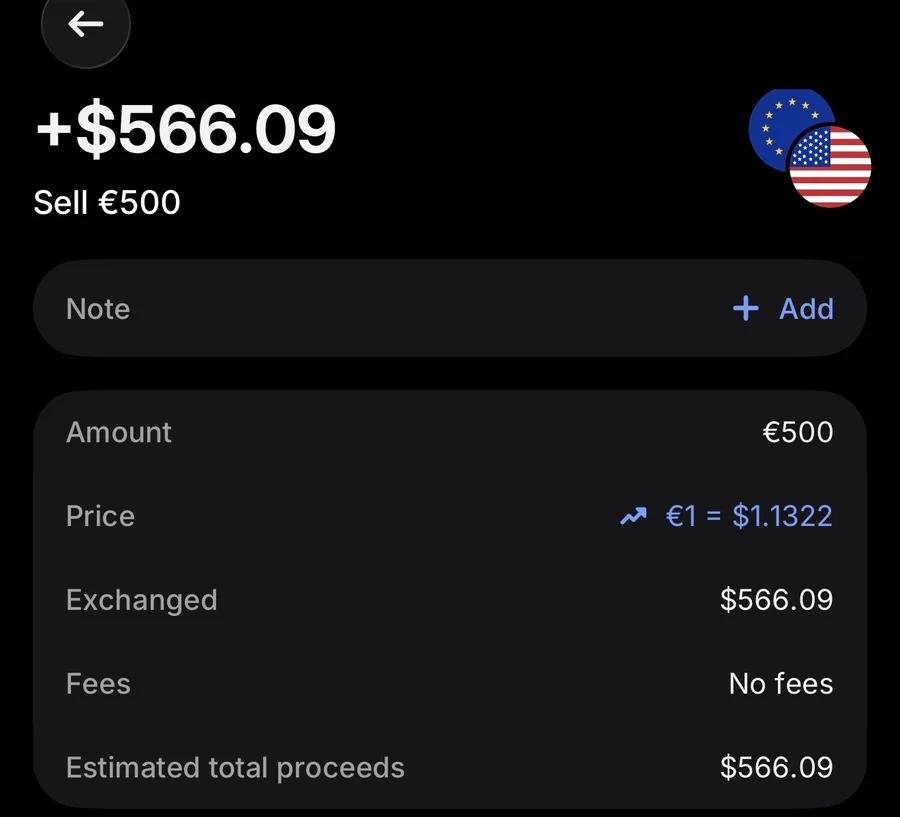
The 2026 numbers, from Revolut’s own plan table: the free Standard plan carries €1,000 a month of fee-free weekday exchange and €200 or five ATM withdrawals, with a 1% weekend markup and a 2% fair-use fee past the allowances. Premium (€8.99/month) removes the exchange cap and lifts ATM to €400; Metal (€15.99) to €800. And the structural news travellers should actually care about: since March 2026 Revolut holds a full UK banking licence, so UK customers’ eligible deposits now sit under FSCS protection up to £120,000, while EEA customers remain with Revolut Bank UAB under Lithuania’s €100,000 guarantee. The fintech-without-a-safety-net argument is aging out.
Wise: the purest exchange rate
(Full teardown: the Wise review.) Wise does one thing with total clarity: every conversion at the mid-market rate you can check on Google, with a small upfront fee, a fixed few cents plus a variable fee from 0.47% on EUR to USD (published pricing, July 2026), and never a weekend surcharge. It holds 40+ currencies and gives you local account details in several, which makes it as much a receiving tool as a spending card. As a pure converter it beats everything; as a daily bank it is thinner. I keep both: Wise for moving money, Revolut for spending it.
Card mechanics, dated July 2026 from Wise’s pricing page: the card itself costs a one-off ~€7, spending in a currency you hold is free, and ATM withdrawals are free for the first ~€250 a month, then charged around 2.7%. Wise is an e-money institution rather than a bank, regulated by the FCA in the UK and national regulators across the EEA: your balance is safeguarded, not deposit-insured, which is exactly why my travel float lives here and my savings do not.
N26 and Monzo: cards that are also your bank
N26 is the pick if you want an actual EU bank account (German IBAN, deposit protection) whose standard card already converts fee-free on payments, the simplicity play for EU residents. Monzo is its UK twin in spirit: fee-free spending abroad at the network rate, honest ATM allowances (£400 fee-free per 30 days abroad, then 3%), and the best budgeting UX of the group. N26’s ladder runs the other way: every tier spends abroad free at the Mastercard rate, but free-tier ATM withdrawals outside the euro area cost 1.7% until the Go or Metal tiers make them free. Neither matches Revolut’s travel toolkit or Wise’s multi-currency depth; both remove the daily-driver fee problem entirely.
The two-card system (what I actually recommend)
The best travel setup is not one card, it is a cheap pair with different failure modes (what older guides call travel cash cards and credit cards; the plastic changed, the pairing logic did not). Card one: an app-first debit card from this page, for spending at honest rates and pulling cash. Card two: a credit card, ideally on the other network (one Visa, one Mastercard), for hotel deposits, car rentals and anything you might need to dispute, because a credit card’s fraud liability sits with the bank while a frozen debit hold is your own money in jail. Keep them in different pockets. Every travel-money horror story I have collected involves a single card and a bad night.
One number worth internalising before the table: a legacy bank card at 3% does not sound dramatic until you multiply. On a €2,500 trip, that is €75 donated for nothing. Any card below costs a rounding error of that.
The honest comparison
The two front-runners get a dedicated head-to-head in Revolut vs Wise; the short version sits in this table.
| Revolut | Wise | N26 | Monzo | |
|---|---|---|---|---|
| Exchange rate | Mid-market weekdays, ~1% weekends | Mid-market always + ~0.5% fee | Mastercard rate, no fee | Mastercard rate, no fee |
| Best at | Travel feature set | Conversion + holding currencies | Being an EU bank | Being a UK bank |
| Watch for | Weekend markup, tier limits | Thin banking features | EU residency needed | UK residency needed |
Which one for whom
Carrying one card: Revolut, and remember the weekend rule, convert what you need on Friday. Moving larger sums or getting paid across borders: add Wise. Wanting one account for salary and travel: N26 in the EU, Monzo in the UK. And whatever you carry, the two habits that outrank any card choice: always pay in local currency, and carry a second card on a different network for the day a terminal hates your first. US readers living in the credit-card points world: the no-FX-fee credit route (Chase Sapphire class) stacks rewards on top, a different game we deliberately keep out of this ranking.
On method: every number on this page comes from the providers’ published fee schedules, pulled and dated July 2026, and the daily-driver judgments come from carrying these exact cards through something like a dozen countries a year. When a number moves, the page moves.
Check Revolut → · Check Wise →
Deeper dives: the full travel tech stack shows how the money layer fits the rest of the kit.
FAQ
Should I bring a credit card or a debit card abroad?
Both, for different jobs: an app-first debit card for honest rates and ATM cash, and a credit card for hotel holds, car rentals and the fraud-liability cushion. A hotel hold on a debit card freezes real money for days.
How much cash should I still carry?
A day or two of expenses in local currency, topped up at fair ATMs, covers nearly everywhere now. The cash-heavy exceptions announce themselves quickly, and the fee-free ATM allowances on these cards exist precisely for them.
Are airport currency exchange desks ever worth it?
As a last resort for one taxi, maybe. Airport desk margins are the worst legal rates in travel; a fee-honest card at a city ATM beats them by whole percentage points.