


Best eSIM for China (2026): Data That Skips the Firewall
By  Ignas Simkus|Last updated: 13 September 2026|How we test
China is the one destination where a data plan is also a censorship decision. Travel eSIMs roam through gateways outside the Great Firewall, which is why Google and WhatsApp usually load on them while the hotel wifi serves you a blank page. Here is how that works and what the plans cost in September 2026. The setup itself has to happen before you board.
Article Summary
- The mechanism: travel eSIMs are roaming products, and that quirk is why blocked apps typically load; the first section explains it
- Default pick: Airalo, with unlimited China plans riding China Unicom
- Budget pick: Saily keeps fixed packs from $4.49 (September 2026), with an app-access caveat covered below
- Non-negotiable: install and activate everything before you fly; Google Play and the providers’ own sites are unreachable from inside
Why your eSIM choice in China is a censorship choice
On a local SIM or any mainland wifi network, your traffic reaches the internet through gateways inside China, and the filtering happens at those gateways. The UK government’s China travel advice lists Google, Facebook, YouTube and X as permanently blocked, with other services blocked in waves, and notes that online products such as VPNs need a Chinese government licence. WhatsApp and Gmail sit behind the same wall. For a traveller that is the real emergency: maps and messages gone at once.
Travel eSIMs behave differently because they are roaming products. Your phone connects to a Chinese tower, China Unicom on Airalo’s plan and China Mobile on Holafly’s, but the data session is carried back to the provider’s gateway outside the mainland and breaks out to the open internet there, beyond the firewall’s reach. This is standard international roaming plumbing rather than a workaround someone built, which is partly why it keeps working.
I have not taken these plans into China myself, so no first-person heroics here. What the record shows: 2026 traveller tests consistently report the same result for Airalo, Saily and Holafly, with Google Maps, WhatsApp, Gmail and Instagram loading with no VPN installed. Nomad claims the same outright in its help centre, though at least one mid-2026 traveller test disagrees for Nomad specifically, so treat that one as less settled. Holafly’s China page only hints, promising you can “keep your WhatsApp number” without explaining why that works.
The routing is not guaranteed. Nothing in your contract promises that traffic exits outside the mainland, and regulators could force local breakout with zero notice. Treat this as the state of play in September 2026, and pack a VPN as the fallback layer.
The plans I would load for China
Airalo
Category-default app with unlimited China plans on China Unicom, and one account that covers your next trip too.
Saily
Fixed packs keep short trips cheap and the Nord Security parentage carries weight. Its own page warns app access may be limited inside China, so size the pack before you fly.
Holafly
Unlimited data on China Mobile with no pack maths. Fair-use throttling applies past a few GB a day.
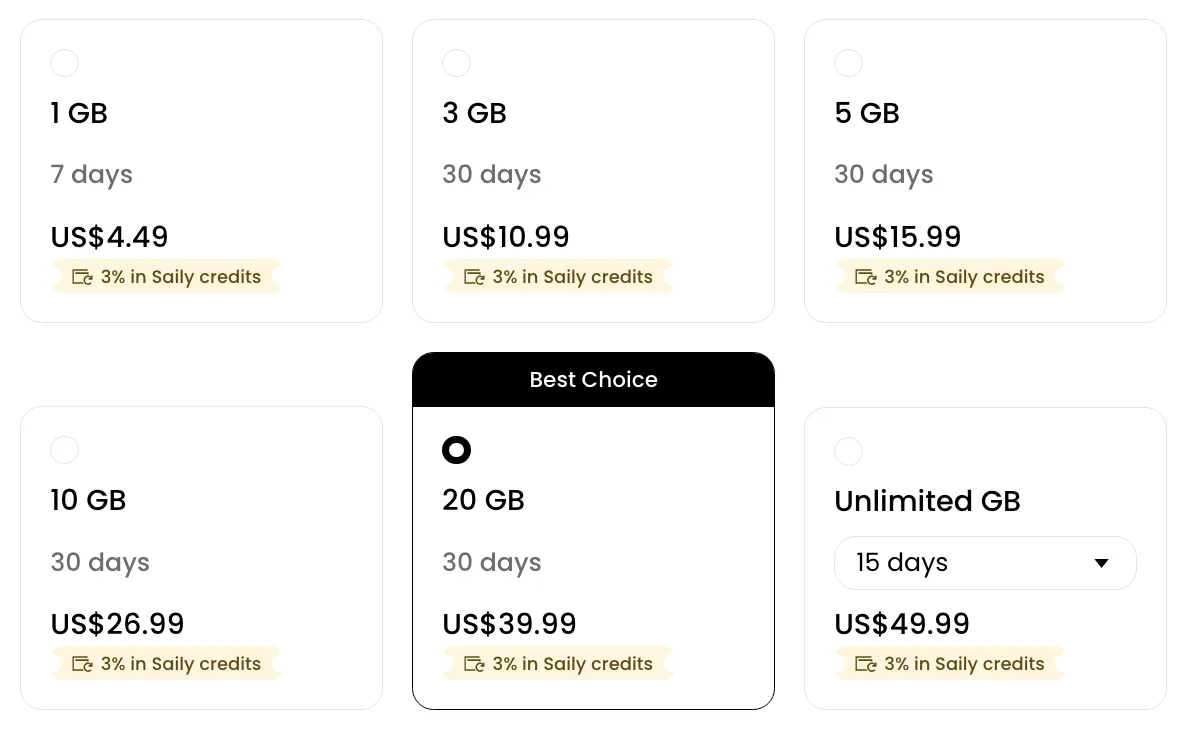
Airalo now sells China as day-based unlimited plans on China Unicom. It lists $11.50 for 3 days, $27 for 7 and $69 for 30 as of September 2026; checkout shows your own currency, so expect the numbers to shift slightly with it. The small packs are not gone, they are just hidden: the storefront’s Standard tab carries fixed packs from $4 for 1 GB over 3 days up to $49 for 50 GB (September 2026), so flip tabs before paying unlimited rates for a light trip. And one quirk to know before you tidy your settings: Airalo says most of its eSIMs cannot be reinstalled once deleted, and the in-app recovery flow only helps the exceptions, so treat deletion as losing the purchase.
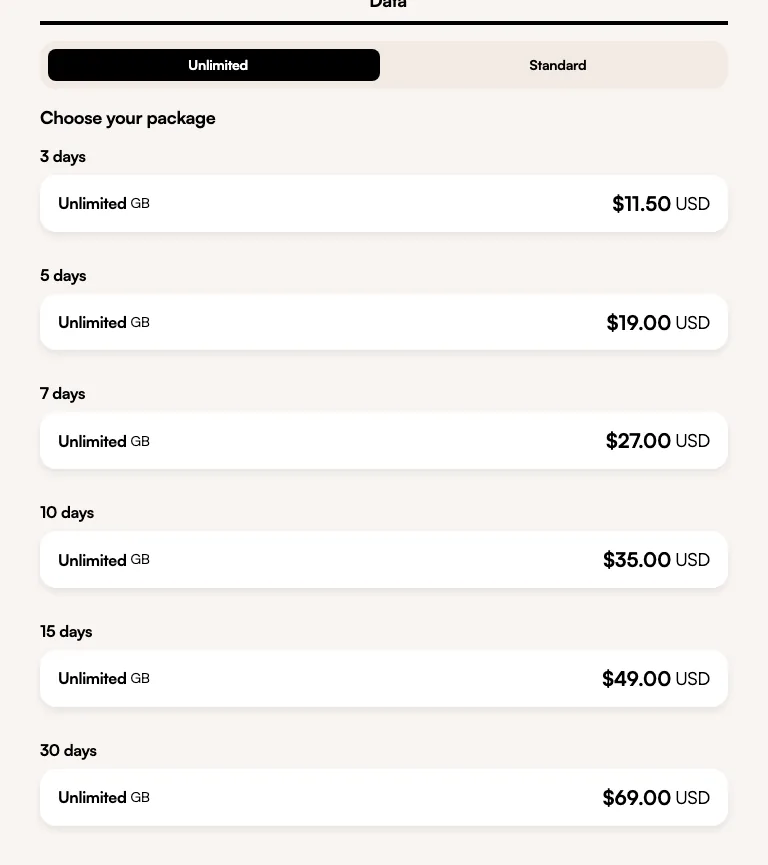
Saily keeps classic fixed packs for China: $4.49 for 1 GB over 7 days, $10.99 for 3 GB and $15.99 for 5 GB over 30 (September 2026), with 10 GB at $26.99 and unlimited options from 5 to 30 days alongside. It is built by Nord Security, the company behind NordVPN, and some plans add web protection and a virtual location toggle. The caveat comes from Saily itself: the same China page carries a banner warning that access to the app may be limited inside the country due to local restrictions. Treat that as the deciding detail rather than small print: buy the pack size you expect to need before departure, because a top-up through a limited app is not a plan you can rely on. The app’s track record is also shorter than Airalo’s.
Holafly does one thing for China: unlimited data on China Mobile, from $11.90 for 3 days to $73.90 for 30, per its China page in September 2026. The fine print matters here. Holafly’s unlimited plans run at full speed for roughly 3 to 5 GB a day depending on destination, then throttle hard until the daily reset, and the China plan page caps hotspot sharing at 1 GB a day. For a phone running maps and video calls all day it is the no-arithmetic option; as a laptop’s lifeline it is the wrong tool.
Nomad is the value alternative. It lists $4 for 1 GB over 7 days in September 2026, with 10 GB at a sale price of $17 and unlimited plans from $12 for 3 days to $33 for 10, riding China Unicom and China Telecom. Its help centre is also unusually direct that blocked services work on its China eSIM. I keep it off the cards for one reason: 2026 Trustpilot reports include outage and connection complaints, Japan especially, and China is the wrong place to find out you drew the short straw.
China eSIM prices at a glance (September 2026)
All checked on each provider’s public China page in early September 2026. Airalo, Saily and Nomad quoted GBP storefronts; Holafly quoted USD.
| Provider | China lineup | Checked September 2026 | Watch for |
|---|---|---|---|
| Airalo | Unlimited, 3 to 30 days, plus Standard-tab fixed packs (China Unicom) | $11.50 for 3 days, up to $69 for 30; fixed packs from $4.00 (1 GB / 3 days) | Fixed packs hide behind the Standard tab; most deleted profiles are gone for good |
| Saily | Fixed packs plus unlimited | $4.49 for 1 GB/7 days, $15.99 for 5 GB/30 days | Carries its own in-China app-access warning; shorter track record |
| Holafly | Unlimited only (China Mobile) | $11.90 for 3 days, up to $73.90 for 30 | Daily fair-use throttling, hotspot caps |
| Nomad | Fixed packs from 1 GB | $4 for 1 GB/7 days, $17 for 10 GB on sale | Mixed reliability reports in 2026 reviews; sale prices may revert |
Prices and plan details last verified September 2026.
Do you still need a VPN in China?
Yes, as a backup layer rather than the main connection. The routing above protects traffic on the eSIM only. The moment you join hotel or airport wifi you are behind the firewall like everyone else: Google logins fail and WhatsApp goes quiet until a VPN comes up. Laptops feel this hardest, because they cannot use the eSIM at all unless you hotspot them through the phone’s roaming data, and on Holafly that hotspot allowance is capped.
A VPN also covers the two failure modes the eSIM cannot: your data allowance dying mid-trip, and the routing itself changing while you are in the country. The catch is the same as everything else in this guide: it must be installed and signed in before you land, because most VPN websites are blocked inside, and China’s cybersecurity rules require VPN services to hold a government licence. Our VPN for China guide covers which providers hold up behind the firewall and how to prepare them. For the wider legal picture, the US State Department’s China advisory is worth ten minutes for its notes on how local laws get enforced.
Payment apps: you need data before you leave the airport
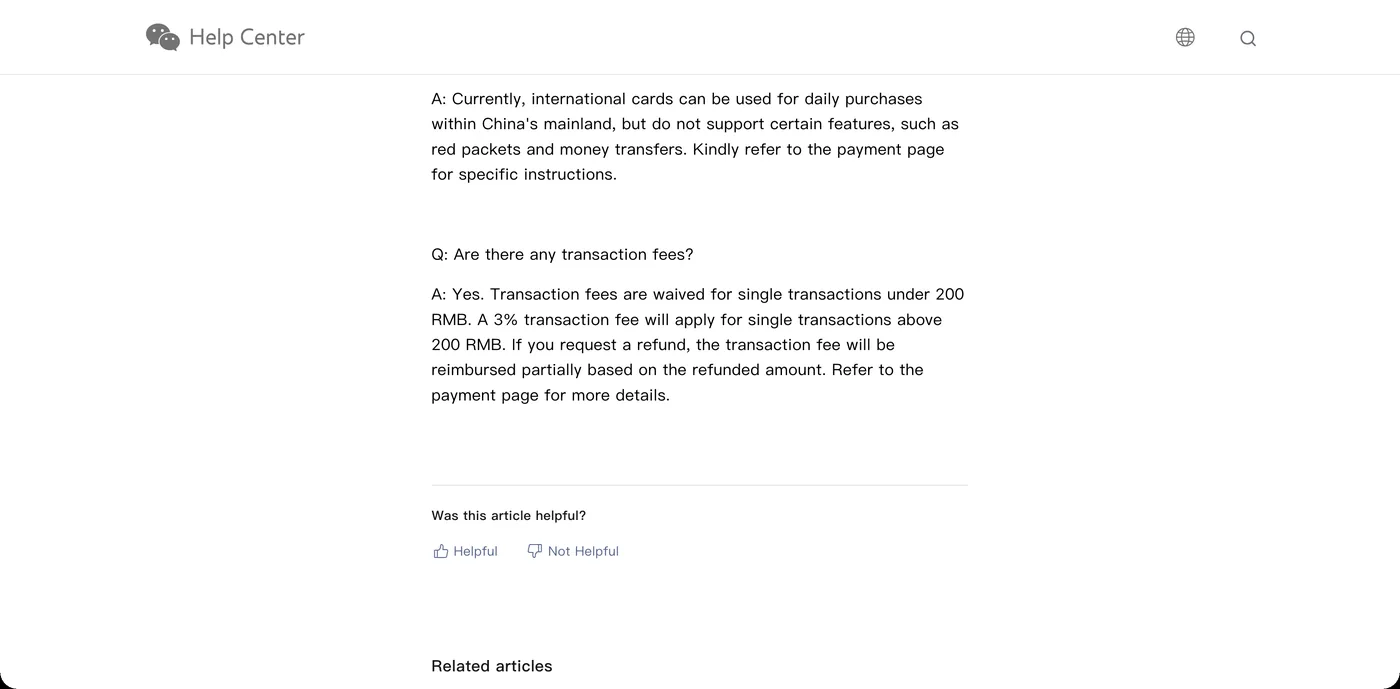
Foreign cards and cash are workable but awkward in mainland China; daily life runs on Alipay and WeChat Pay QR codes, and both now operate official international flows that link a foreign Visa or Mastercard with passport verification, no Chinese phone number required. WeChat Pay waives its fee on payments under 200 RMB and charges 3% above that, per its own help centre. The catch for arrivals is bootstrapping: activating either app means linking a card and clearing an identity check, and both steps need a working connection. Airport wifi sits behind the firewall like every other mainland network, and 2026 connectivity guides describe the free networks as gated behind SMS logins that expect a Chinese number, with passport-scan kiosks as the fallback at bigger hubs.
So the order of operations is fixed. Set up Alipay or WeChat Pay at home on your own wifi, link the card, clear the identity checks, and land with a working eSIM so the first taxi’s QR code is a formality. Skip either half and your first hour turns into a hunt for a driver who takes cash.
Install before you fly, because inside the door mostly shuts
This practicality outranks price. Google Play is blocked in mainland China, and activation emails may land in a Gmail inbox you cannot open on local wifi. Travellers consistently report the eSIM providers’ own sites as unreachable from inside too, so setting up a fresh plan after arrival ranges from painful to impossible. Apple’s App Store is the partial exception: 2026 traveller guides report it stays reachable from inside, with content adjusted to the local region. Buy and install at home; the flight is your deadline.
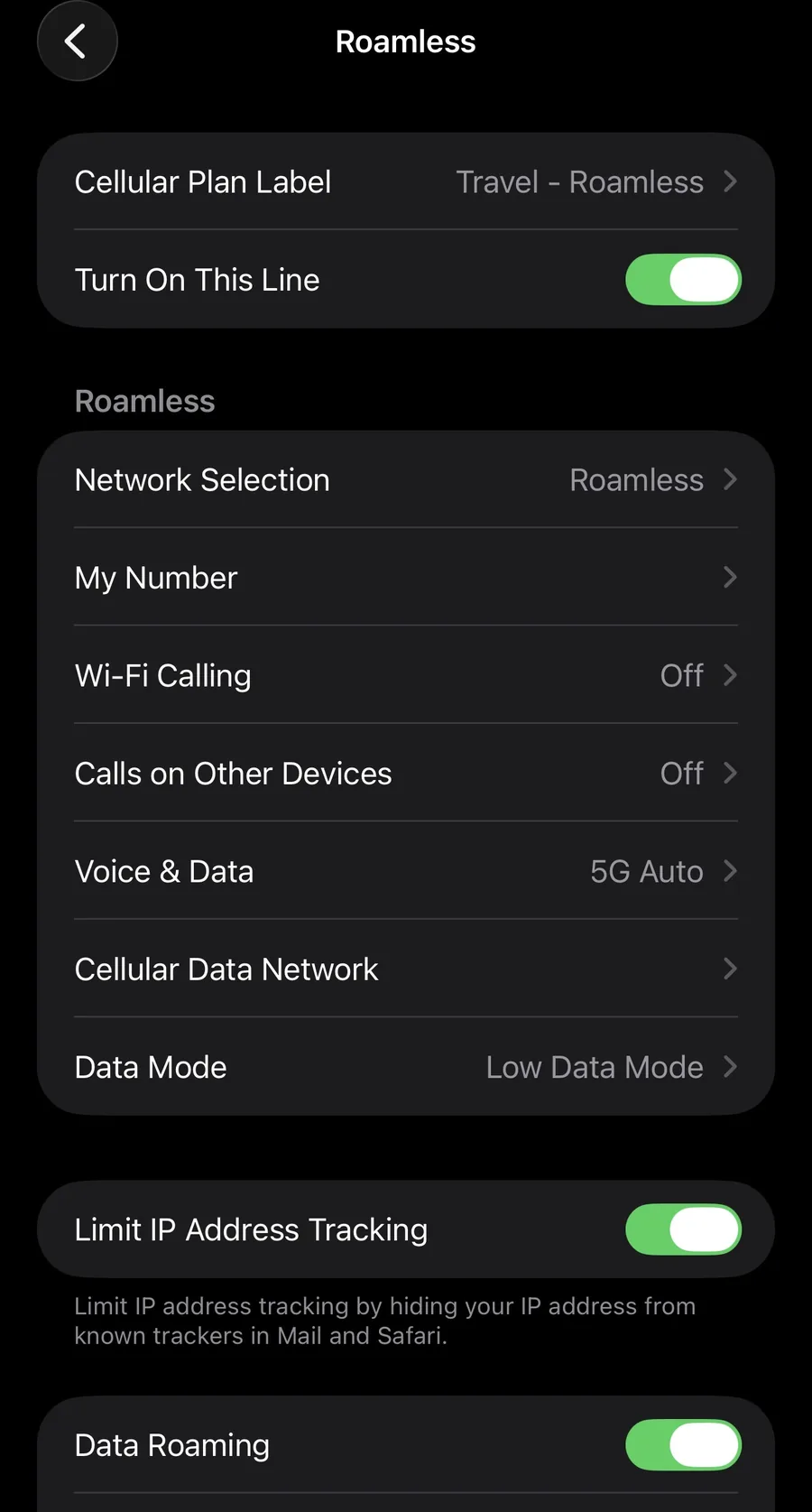
The install itself takes ten minutes. Add the profile and switch data roaming on for the travel eSIM, then give it an obvious label: these plans are roaming products, and with roaming off they stay silent. Our eSIM install walkthrough covers the setup step by step, and the eSIM troubleshooting guide covers landing-day fixes, manual network selection first. One hardware caveat: iPhones sold in mainland China shipped without eSIM support for years, and that only began changing with the late-2025 models, so a mainland-bought phone needs a compatibility check before you spend anything.
FAQ
Does WhatsApp work in China on a travel eSIM?
Typically yes, and with no VPN. The roaming route described at the top of this guide is the reason, and it is the consistent finding across 2026 traveller reports for Airalo, Saily, Holafly and Nomad. On hotel or cafe wifi the same phone loses WhatsApp unless a VPN is running, and the routing carries no guarantee for the future.
Are VPNs legal for tourists in China?
China runs a licensing regime: online services including VPNs need government approval, and the approved ones filter exactly what you came to unblock. Enforcement has historically fallen on sellers and domestic users rather than visiting tourists checking email, but the rules give authorities wide discretion. Set everything up before you travel and keep a low profile.
Can I buy an eSIM after I arrive in China?
Plan as if you cannot. Provider websites and Google services are unreachable on local networks, so a fresh purchase tends to die at the checkout page or the confirmation email. At least one provider says so on its own page: Saily warns that access to its app may be limited inside China. Land with the plan installed and a bigger pack than you think you need, and treat anything you manage to buy after arrival as a bonus.