


Home»Trip Stack»Japan
Japan Travel Tech (2026): eSIM, VPN, Cards and Cover, the Whole Stack
By  Ignas Simkus|Last updated: 22 July 2026|How we test
Japan runs on infrastructure that mostly works better than yours, with three exceptions that catch every visitor (all three tested first-hand for this guide): connectivity myths, a cash culture that persists behind the tech, and payments that behave differently than the guidebooks say. Here is the full stack, decided.
Article Summary
- Connectivity: an eSIM riding a first-tier Japanese network: our Japan eSIM pick
- Payments: contactless card + a Suica/Pasmo in your phone wallet + more cash than you expect
- Streaming and access: a VPN for your home catalogue and geo-blocked apps
- Cover: medical cover confirmed before arrival; Japanese healthcare is excellent and not free to visitors
Connectivity: the wifi myth and the carrier reality
The myth that Japan is blanketed in usable free wifi survives every year of visitors discovering otherwise: cafe and station wifi exists but is login-walled, throttled and unreliable exactly when needed. Mobile data is the answer, and Japan’s mobile networks are excellent, with the catch that quality depends on which of the three carriers, NTT Docomo, KDDI/au or SoftBank, your eSIM resells. Docomo’s reach into the rural corners is the deepest, which is why the carrier question decides the whole purchase. That decision, provider by provider, is worked through in our dedicated best eSIM for Japan guide; the short answer is to buy on network first and app second, the rule underlying all our eSIM rankings.
Install before you fly, per the install guide, and note that Narita and Haneda’s SIM vending machines are the most expensive way to solve a problem you could have solved at home.
Payments: three layers, all necessary
Layer one, contactless card. Card acceptance in cities is now broad, and a travel card with no foreign-transaction fees is the right default; the fee math and card options live in the travel-cards ranking.
Layer two, the IC card in your phone. Suica or Pasmo, added to Apple Wallet or Google Wallet, tops up from your card and taps you through every train gate, konbini, and vending machine in the country. It is the single highest-utility piece of travel tech Japan offers, and iPhone support means no physical card is needed at all. One tested caveat on funding it: foreign Mastercard and Amex cards top up smoothly inside Apple Wallet, while foreign Visa cards often fail or block intermittently, so load a card on the right rail before you land.
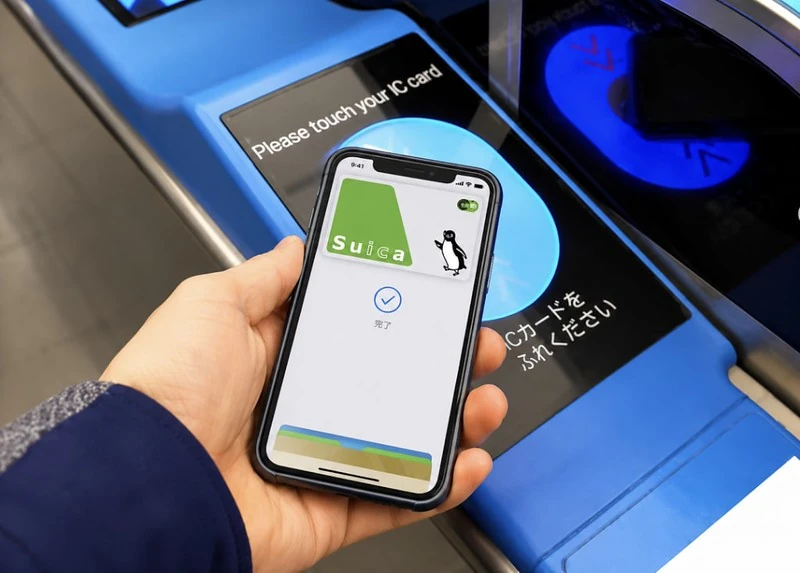
Layer three, cash. Rural ryokan, shrines, small izakaya and plenty of Kyoto still run on cash. Budget more than feels modern, and withdraw from 7-Eleven ATMs, which take foreign cards reliably where bank ATMs refuse them. When the machine offers to convert to your home currency, decline the conversion; the markup hides in the rate, not the fee line.
The VPN, for the evenings
Japan blocks nothing, so the VPN case here is comfort rather than access: your home Netflix catalogue back (how that works), banking apps that dislike Japanese IP addresses (the foreign-IP problem), and clean habits on a month of hotel wifi. Any pick from our travel VPN ranking covers Japan effortlessly; servers in Tokyo are universal and fast.
Cover: the part Japan’s politeness hides
Japanese healthcare is superb and bills visitors in full: a hospital admission runs to serious money, and hospitals expect payment or proof of insurance. Standard travel policies handle Japan well, and the checklist of what to actually check, medical limits, activity exclusions if you are skiing Niseko, and the claims process, is the business of our travel insurance hub. The one Japan-specific note: bring policy documents digitally and know your insurer’s 24-hour line; Japanese hospitals are process-driven and reward arriving organised.
The apps that run a Japan trip
Download these at home, because several want accounts and verification codes best handled before the flight. Google Maps plus offline areas for Tokyo, Kyoto and any rural legs: it handles Japanese transit routing well, and the offline layer covers the valleys. Japan Transit Planner or Navitime for the train-nerd layer Maps occasionally fumbles: platform numbers, car positions, and which of the four Shinjuku exits saves you eleven minutes. Google Translate with Japanese downloaded for the camera function, which turns menus and machine buttons from art into information.
Your IC card lives in the wallet app, covered above, and the airline app plus hotel chain apps round out the boring essentials. Payment-adjacent: PayPay is everywhere but effectively requires a Japanese phone number, bank account or local ID: we tried, and a visitor genuinely cannot get through registration, so do not bother; contactless card plus IC card covers the same ground without the registration wall.
One deliberate omission from this list: a rail-pass calculator. The Japan Rail Pass price rises of recent years turned it from default to edge case, and most itineraries now do better on point-to-point tickets, which is precisely the kind of moving fact we date-stamp rather than assert forever.
The pre-departure list, Japan edition
| Before you fly | Details |
|---|---|
| Install the eSIM, leave it off | Japan eSIM guide: carrier decides it |
| Add Suica/Pasmo to the phone wallet | Top up with the travel card once, at home |
| Confirm the travel card’s foreign-fee terms | Money hub: fee-free is the default to demand |
| Set up the VPN, test home streaming once | Ranking here |
| Confirm medical cover + save the insurer’s line | Insurance hub: check winter-sports terms if relevant |
| Download offline maps for rural legs | Docomo reaches far; valleys still exist |
That is the whole stack. Japan rewards preparation more than most destinations because everything there works, provided you arrive holding the right pieces. The generic version of this list, for any destination, is the travel tech stack.
FAQ
Is Japan still cash-only?
Far less than its reputation. Cards and mobile pay cover cities and chains; cash persists at shrines, small ramen counters and rural inns. Carry a modest float and know that 7-Eleven ATMs take foreign cards happily.
Do I need a pocket wifi device, or is an eSIM enough?
The pocket wifi era is over for most visitors: an eSIM does the job without the battery brick, the rental counter, or the return deadline. The exception is heavy-hotspot group travel, where one rented router can beat four eSIMs.
Does my VPN need to be on in Japan?
Japan blocks nothing you will miss, so this is not about access. On hotel and convenience-store wifi the usual shared-network rules apply; mine stays on out of habit, not necessity.