


VPN for China Travel (2026): What Works, Framed Honestly
By  Ignas Simkus|Last updated: 22 July 2026|How we test
Two things are true at once: China restricts VPNs, and millions of visitors use them anyway to reach Gmail, Google Maps and WhatsApp. Years inside the VPN industry taught me how this cat-and-mouse actually moves. This guide covers the legal reality, what technically works, and the one non-negotiable rule: everything must be installed before you land.
Article Summary
- The law: unlicensed VPNs are restricted; enforcement historically targets providers and domestic sellers, not tourists
- The tech: only VPNs with obfuscation stand a chance; standard connections are detected and dropped
- The rule: install and test everything before arrival; app stores and VPN sites are blocked inside
- Backup plan: a travel eSIM whose data routes outside China often reaches blocked services without any VPN
The legal picture, without hand-waving
China’s regulations, in force since the 2017 Ministry of Industry and Information Technology rules, permit only state-licensed VPNs, and the licensed ones exist for corporate use with the filtering intact. Unlicensed VPN services are the target of the enforcement regime: providers get blocked, domestic sellers have been prosecuted. Publicly reported cases against individual foreign tourists for personal VPN use are essentially nonexistent, and that is the honest state of it: restricted on paper, tolerated in practice for visitors, with no guarantee that practice never changes.
Our position: we describe what travellers do and the risk framing around it; whether to use one is your call, made with open eyes. For the broader country-by-country picture, VPN legality worldwide is the reference page.
What is actually blocked
More than most first-time visitors expect: Google everything (search, Gmail, Maps, Drive), WhatsApp, Instagram, Facebook, X, YouTube, most Western news sites, and, crucially, the app stores’ ability to serve you VPN apps once inside. Hotel wifi in international chains is filtered like everywhere else, whatever the concierge implies. Plan for the blocks being total and be pleasantly surprised, not the reverse.
What technically works
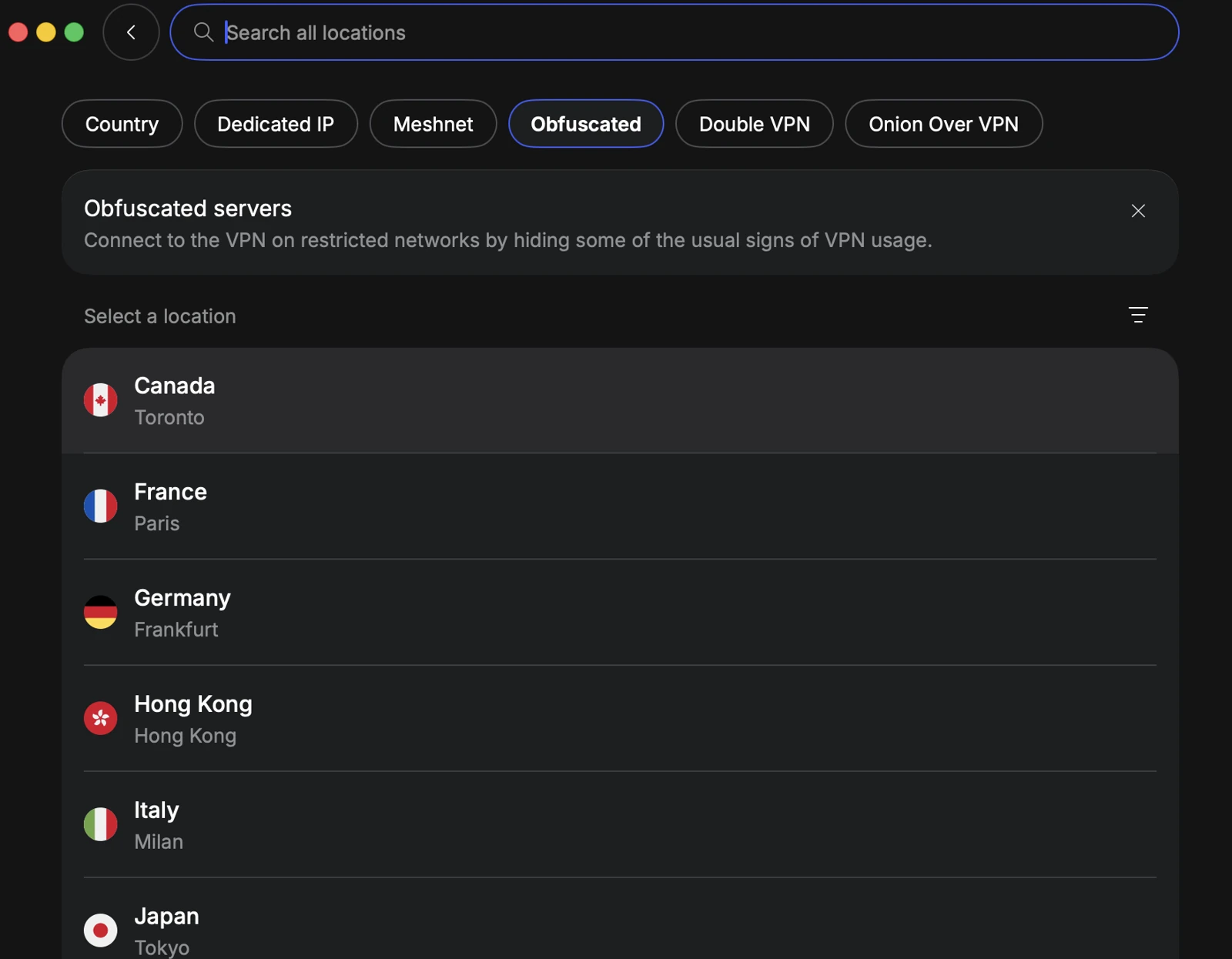
The Great Firewall detects and drops standard VPN protocols, including plain WireGuard and OpenVPN. What survives is obfuscation: traffic dressed as ordinary HTTPS. Among mainstream providers, NordVPN’s obfuscated servers are the ones with a real, if intermittent, mechanism that works exactly as intended in our own testing; what varies is China itself. In-country reporting still describes connections that drop and re-establish, better and worse days, and politically sensitive periods when everything degrades at once. Proton VPN’s Stealth protocol has a similar but thinner record. No provider, ours or anyone’s, works reliably every day in China, and any site telling you otherwise is selling something.
Configuration notes that matter: enable the obfuscated/stealth mode before flying, download the manual-config fallbacks the provider offers, and note the support email on paper, since reaching the support site from inside is its own problem. One more tip the SERP’s veterans agree on: one thing we verified ourselves: provider sites like nordvpn.com are unreachable from inside China, so subscription, apps and settings must all be in place before you land. Land unprepared and the workable bootstrap is any free VPN or proxy that still connects, used just long enough to reach the provider’s site and pull the real apps down.
Field honesty about the wider market: 2026 China testing across the review industry consistently narrows the still-working list to a handful, with ExpressVPN ranked first by several testers and Astrill, whose StealthVPN protocol was built for exactly this, the long-stay and business-community favourite despite its price. Neither is a partner of ours; both belong in an honest picture of what works there. From our own side of the wall: NordVPN and Surfshark, obfuscation on, are the two we know inside out and would board the plane with.
The eSIM alternative most guides miss
A travel eSIM can partially sidestep the whole question. Many international travel eSIMs route their data through gateways outside mainland China, which means Google, WhatsApp and Instagram often load over cellular data with no VPN at all, while the same phone on hotel wifi is fully filtered. It is not guaranteed, it varies by provider and plan, and it can change, but it is the single most useful China-connectivity fact we know. Pair the right eSIM with an obfuscated VPN as backup and you have two independent paths to the open internet. Our travel eSIM rankings cover the providers; check the China plan’s routing before relying on it.
The pre-departure checklist
Everything happens before wheels-up, because inside China you cannot download, subscribe, or verify anything easily.
| Before you fly | Why |
|---|---|
| Install the VPN app, log in, enable obfuscated mode | VPN sites and app stores are blocked inside |
| Test the connection once from home | Account or payment issues are unfixable later |
| Install a travel eSIM with a China plan | External routing is your no-VPN fallback |
| Download offline maps and translations | Google Maps may be intermittent even with the VPN |
| Set up bank access through the VPN once | Foreign-IP blocks stack on top of the firewall: the banking-apps problem |
If the VPN goes dark mid-trip
Plan for degraded days, because they happen: during sensitive political periods the firewall tightens and even the obfuscated connections that worked on Tuesday fail on Thursday. The playbook, in order: switch servers repeatedly rather than giving up on the first failure, since blocking is per-address and the provider rotates; try the manual configurations you downloaded at home, which sometimes survive when the app’s auto-connect does not; fall back to your externally-routed eSIM data for the blocked essentials; and for anything that can wait, let it wait, because degraded periods pass in days.
What not to do: download random “free VPN” apps from links that still load, which in China are the least trustworthy software category on earth, or announce your workaround hunting on monitored platforms. And keep perspective on what actually needs the open internet: WeChat, Alipay, Didi and the payment layer of Chinese daily life all work without any of this, and a visitor’s practical dependence on the blocked services is usually two apps deep once the trip starts.
For the general question of which VPN to carry as your travel default, China aside, the travel VPN ranking is the place to start, and our NordVPN review covers the provider whose obfuscation record makes it the China-relevant pick.
FAQ
Is using a VPN illegal for tourists in China?
The regulations target unlicensed providers, not visitors, and enforcement against tourists is effectively unheard of. The practical risk is technical: your VPN not connecting, which is why installing and testing before arrival is everything.
Do free VPNs work in China?
Almost never for long. Fighting sophisticated blocking takes resources no free product carries. This is the one destination where paying for proven infrastructure is not optional.
What still works on hotel wifi in China without a VPN?
Everything that is not blocked: local apps, most email, plenty of Western services outside the famous list. If your trip can live inside WeChat, local maps and email, you can survive without one. Most Western travellers cannot.