

Home»Destinations»Europe
Europe Travel Tech 2026: EES, ETIAS and the Full Stack
By  Ignas Simkus|Last updated: 3 September 2026|How we test
Europe quietly finished the biggest border-tech change in a generation: EES has been fully operational since April 2026, photographing and fingerprinting every non-EU visitor. ETIAS is next, though the EU has dropped its late-2026 target and 2027 now looks realistic. Living here and crossing these borders monthly, here is the stack that makes Europe trips frictionless, paperwork included.
Article Summary
- EES: fully operational since 10 April 2026, biometric entry/exit for non-EU visitors, passport stamps retired
- ETIAS: not live yet, launch date removed from official pages, 2027 realistic; €20, valid three years, with a grace period at launch
- Connectivity: one regional eSIM covers the continent, with the UK/Switzerland list check
- Money: card country, but DCC and weekend markups still bite
The border layer: what actually changed
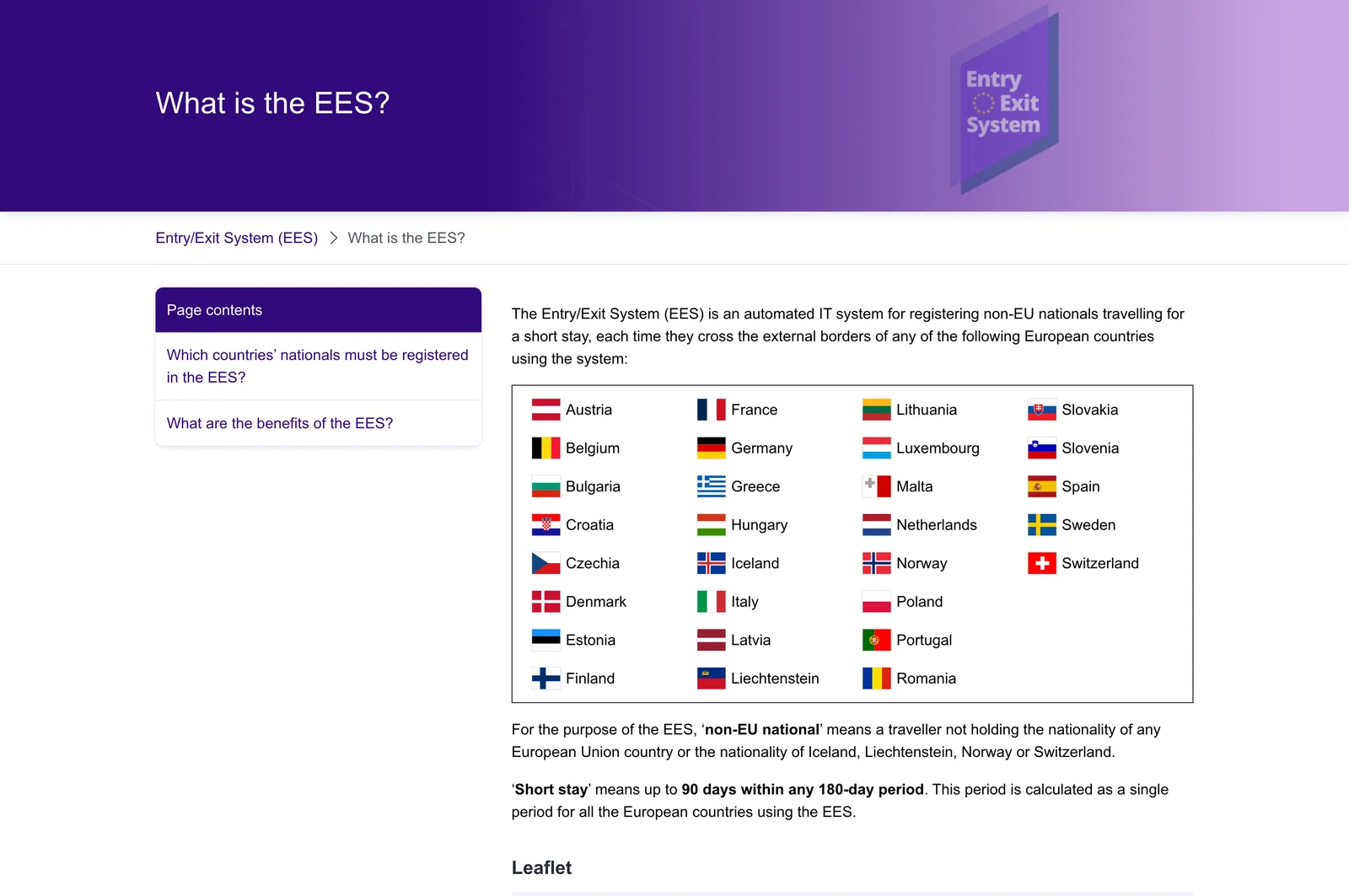
The Entry/Exit System rolled out in phases from October 2025 and reached full operation on 10 April 2026: non-EU visitors now register face and fingerprints on first entry, and the system, not a stamp, tracks 90/180-day stays automatically. Practical effects: first-entry queues run longer while your biometrics enroll (subsequent entries speed up), overstay arithmetic became automatic, and the classic stamp-page souvenir is history. ETIAS, the €20 pre-travel authorisation for visa-exempt nationals (valid three years once issued), was targeted at the last quarter of 2026, but the EU has quietly removed that date from its official pages and 2027 now looks realistic, check the EU’s official pages when booking winter trips.
What EES means at the booth, now that it is fully live: your first post-April-2026 entry takes longer (fingerprints and a photo enrol you in the system), subsequent entries speed up at self-service kiosks, and the 90-in-180-day arithmetic is now automatic and unforgiving, no stamp-page ambiguity left. The list of 29 participating countries and the current rules live on the EU’s official EES pages. For the traveller’s-eye version, kiosks, queues and the 90/180 arithmetic, see our EES guide.
One warning that earns its sentence: when ETIAS does launch, apply only on the official EU site. An entire industry of lookalike sites already sells “ETIAS applications” for multiples of the real €20 fee, for a system that is not even accepting applications yet. Bookmark travel-europe.europa.eu and ignore everything else. The fee, the realistic timeline and the copycat industry get the full treatment in ETIAS, explained.
Connectivity: the easiest continent
Europe is the one region where a single eSIM genuinely covers a multi-country trip, dense borders, uniformly strong networks, mature regional plans. The full reasoning lives in our Europe eSIM guide; the executive summary is: buy regional for multi-country routes, check the country list for the UK, Switzerland and the Balkans (the three habitual exclusions), and single-country trips buy single-country plans. EU roam-like-at-home covers EU residents only; visitors need the eSIM. Trains between countries hand over seamlessly; ferries are the one place to flip airplane mode per the maritime-roaming warning.
The nuance worth spelling out: EU roam-like-at-home belongs to people with an EU or EEA SIM contract, and it covers the EU and EEA, not Switzerland and not the UK on many plans. Visitors from outside Europe get none of it, which is why the regional eSIM exists; Europeans crossing to Switzerland or Britain often discover their “free roaming” has a border after all. Check your own plan’s country list with exactly the same suspicion you would apply to an eSIM’s. Switzerland trips that wire often enough that it now has a dedicated eSIM guide.
Money: solved, with two asterisks
Europe is card country to a degree that surprises even Americans, but the two traps from our money hub follow you here. Dynamic currency conversion is endemic in tourist zones across Europe; the local-currency rule applies at every till from Lisbon to Helsinki. And the weekend markup on some travel cards meets its natural predator in the Friday-conversion habit. Non-euro corners, Switzerland, Czechia, the Nordics, the UK, make a multi-currency card earn its keep; cash needs are minimal outside German bakeries and Italian espresso bars.
The privacy layer
Hotel and rental wifi across Europe is as unsecured as anywhere; the travel VPN case is unchanged, and doubly practical here for keeping home streaming catalogues (our Netflix guide exists because EU catalogues differ country to country more than travellers expect). Nothing Europe-specific to fear; everything generally sensible to keep.
The insurance layer Europeans already half-have
Europeans get one layer many guides forget to mention: the EHIC (and its UK successor, the GHIC) entitles you to state healthcare across the EU on the same terms as locals, and it is free from the official EU health portal. It is genuinely valuable and genuinely not travel insurance: no repatriation, no private clinics, no cancelled-trip refunds, no baggage. The honest setup for EU and UK travellers inside Europe is both: the card for state care, a light policy for everything the card ignores; what travel insurance actually covers maps that gap.
The pre-flight checklist, Europe edition
Passport validity (three months beyond departure for Schengen). ETIAS status check once it goes live. Regional eSIM installed on home wifi, country list verified. Travel card loaded, weekend conversion done Friday, second card packed. Offline maps for the city-hopping. And the boring winner from our full stack: a plug adapter that also charges by USB-C, because European hotel desks still ration sockets like it’s 1995.
FAQ
Do I need ETIAS for my next Europe trip?
Not yet. The €20 authorisation was targeted for late 2026 and the EU has already walked the date back, with 2027 now realistic; once live it will be valid three years. Check the official EU pages when you book.
Does EU roaming include Switzerland and the UK?
No, roam-like-at-home covers the EU and EEA; Switzerland and the UK sit outside it, exactly as they sit outside many cheap Europe eSIM tiers. It is the continent’s most common bill-shock line item.
Is tap-to-pay accepted everywhere in Europe now?
Nearly. Cards and phones tap through most of the continent, with cash pockets, smaller German restaurants, market stalls, holding out. A fee-honest card plus a small cash float covers the lot.