


Home»eSIM»eSIM vs roaming vs local SIM
eSIM vs Roaming vs Local SIM: The Actual Cost Maths
By  Ignas Simkus|Last updated: 22 July 2026|How we test
Three ways to get online abroad, and the cheapest one depends entirely on your trip. I’ve paid all three of these bills more times than I can count. Here is the honest maths, without the provider spin, so you can pick in about two minutes.
Every traveller faces the same three options the moment the plane lands. Keep using your home plan and roam. Buy a local SIM card at your destination. Or install a travel eSIM before you leave. They are not ranked best to worst. Each wins a different kind of trip.
The three options at a glance
| Option | Roughly costs | Best for | The catch |
|---|---|---|---|
| Roaming (home plan) | A daily fee, or eye-watering per-MB rates | Very short trips where your plan includes cheap roaming | Surprise bills; throttling after a small allowance |
| Travel eSIM | Low per-GB, paid up front | Most short and medium trips; convenience | Usually data-only; not always the cheapest per GB |
| Local SIM | Usually the lowest per GB | Long stays, heavy use, needing a local number | Queue, passport, sometimes registration; time on arrival |
Roaming: convenient, occasionally ruinous
Roaming means using your normal plan abroad. Some carriers bundle it cheaply within certain regions, and if yours does, for a short hop it can be the simplest choice: nothing to install, your number just works.
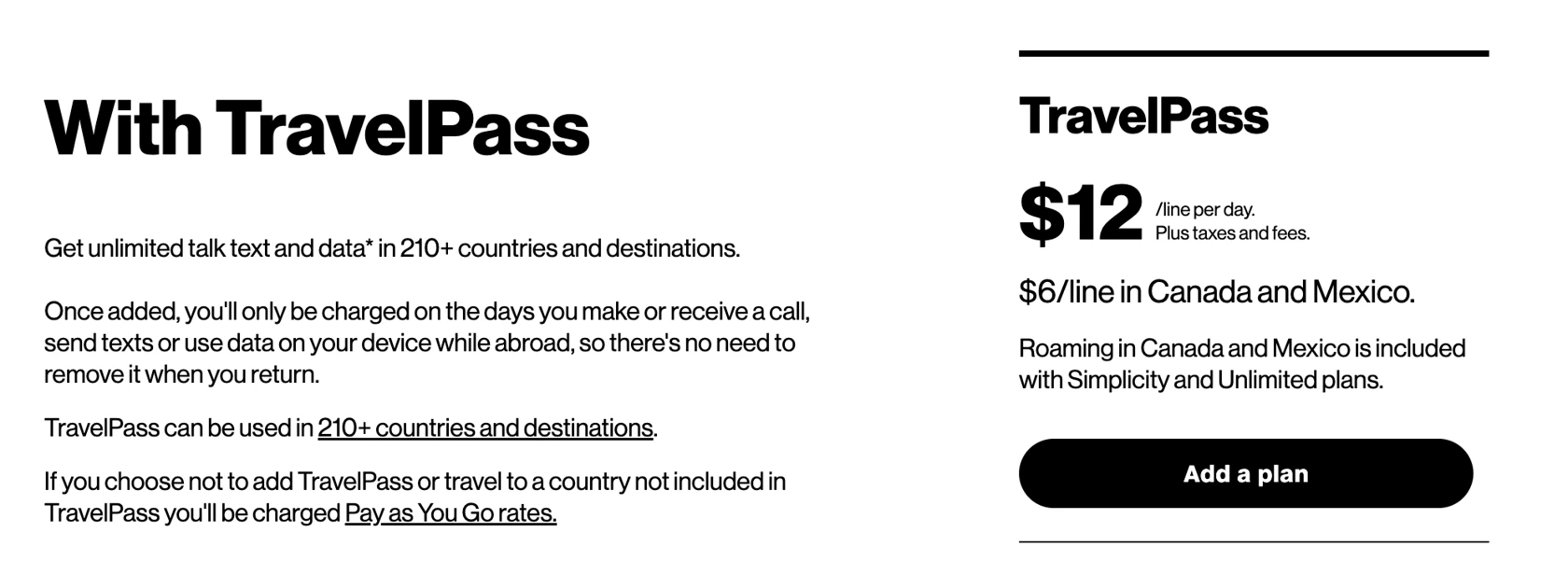
The danger is outside those bundles. Pay-as-you-go roaming can run anywhere from $5 to $20 per megabyte, and even the “convenient” daily roaming add-ons from major carriers typically cost $10 to $15 a day, often throttling you after 500 MB to 1 GB. On a ten-day trip that is a $100-plus line item before you have watched a single video. Travel eSIMs, by contrast, tend to land 60 to 90 percent cheaper than roaming for the same data. Always check your own carrier’s rate for your destination, because the horror-story bills almost always come from someone who assumed their plan had them covered and it did not.
Travel eSIM: the convenience sweet spot
An eSIM is usually the right answer for the broad middle: trips of a few days to a few weeks, where you want data working the moment you land and do not want to spend your first hour in a phone shop. You install it at home, land connected, and keep your own number for texts and calls.
It is not automatically the cheapest per gigabyte. What you are buying is the removal of hassle and bill-shock risk. For a one or two week trip, the saving from hunting down the absolute cheapest option is usually a couple of pounds, and not worth twenty minutes of comparison. If that is your situation, our ranked best travel eSIM guide is the shortcut.
Local SIM: cheapest per GB, if you have the time
Buy a SIM at your destination and you generally pay close to what locals pay, which is often the lowest rate available. You also get a local phone number, handy for booking taxis, restaurants, and anything that texts you a code.
The cost is time and friction: finding a reputable seller (not the marked-up airport kiosk), sometimes showing a passport for registration, and swapping the card. For a long stay or heavy data use, that one-off effort pays for itself. For a weekend, it rarely does.
So which should you pick?
Pick an eSIM if
- Your trip is a few days to a few weeks
- You want data working on arrival
- You are happy keeping your home number for calls
Pick a local SIM if
- You are staying weeks or months
- You use a lot of data
- You need a local number
And roaming only if your home plan genuinely includes cheap or free roaming where you are going. If it does not, it is almost always the most expensive of the three.
| Two-week trip | Carrier roaming | Travel eSIM | Local SIM |
|---|---|---|---|
| Typical cost | $70-210 on ~$10/day passes; legacy per-MB rates run $5-20/MB | Under $10-30 for 5-15 GB | $10-30 at official stores |
| Setup effort | None | 5 minutes at home | Queue + passport at destination |
| Home number | Works throughout | Works alongside (dual SIM) | In a drawer unless dual-SIM phone |
| Best when | Your plan includes the destination free | Trips under a month, most people | Long stays, heavy data, local number needed |
Cost ranges last verified July 2026.
If the eSIM column won your vote, two pages take it from decision to done: the five-minute install, and the destination guides that name the right network for where you are going, Thailand being the worked example of how much the local-SIM counter comparison changes country by country.
One more angle worth knowing: roaming charges are also a travel-money leak, in the same family as foreign transaction fees. If you are optimising the boring costs of a trip, our travel money guide covers the rest. And the standard behind every figure on this page is in how we test.
FAQ
Can I switch between eSIM and roaming mid-trip?
Freely, and it is a legitimate strategy: land on the roaming pass for the first hour, switch to the cheaper eSIM once settled. Both lines live in the phone; only your default data selection changes.
Do local SIMs still beat eSIMs on price?
At the counter, often yes, especially for month-long stays where local packages get generous. You pay in queues, passport registration and physical-swap faff instead of money. My split: eSIM for arrival and short trips, local SIM only when a stay stretches past a month.
Does using an eSIM abroad expose my home number?
No. The home number lives on its own line and behaves exactly as before, ringing and receiving texts if you leave it enabled. The eSIM adds a data lane; it does not touch your identity.