


Home»Trip Stack»Thailand
Thailand Travel Tech (2026): The Full Stack, Including the Scooter Problem
By  Ignas Simkus|Last updated: 22 July 2026|How we test
Thailand is the easiest hard country there is: everything works, cheaply, until the one afternoon it matters that you read the fine print. Everything below is checked on the ground, ATM receipts included. The fine print is mostly three items: ATM fees, an eSIM network choice, and what your insurance quietly says about scooters.
Article Summary
- Connectivity: an eSIM riding AIS for island-and-rural reach: our Thailand picks
- Money: minimise ATM visits (fixed fee per withdrawal), pay by card where offered, always in baht
- Access: a VPN for home banking and your streaming catalogue
- Cover: read the scooter clause before renting anything with a motor. Read it twice.
Connectivity: one decision, then done
Thai mobile coverage is excellent and cheap; the only real decision is which network your eSIM rides. AIS has the widest reach, which decides it for island-hoppers and anyone leaving the Bangkok-Chiang Mai-Phuket triangle; True is fine in the cities. The provider-by-provider version, including why Nomad’s Thailand packs are the value play of the whole region, is in the Thailand eSIM guide. Install before flying (Android and iPhone guides cover the five minutes), and skip the airport counters unless you enjoy queueing after a red-eye.
Money: the 220-baht toll and how to dodge it
The famous one: Thai bank ATMs charge foreign cards a fixed fee per withdrawal, 220 baht at most machines and 250 to 350 at some, on top of whatever your own bank takes. The fee is per transaction, not per amount, so the counter-move is blunt: fewer, larger withdrawals, from a travel card that refunds or minimises its own side of the fees. Card acceptance in urban Thailand is broad enough that cash is for markets, taxis and islands; the card strategy itself, including which travel cards eat foreign fees, has its own ranked guide. The general machine-picking routine lives in the ATM-fee guide; Thailand just charges more for ignoring it.
Two habits finish the money section. When a terminal offers to charge you in your home currency, decline: dynamic currency conversion is a worse exchange rate wearing a helpful face; always pay in baht. And keep your banking apps working from abroad, home SIM active for SMS codes, VPN for any bank that blocks Thai IP addresses, per the banking-abroad playbook.
The scooter problem, which is really an insurance problem
The clause-by-clause version, with the insurer matrix and the no-licence exception, lives in the scooter insurance guide; the Thailand short version follows.
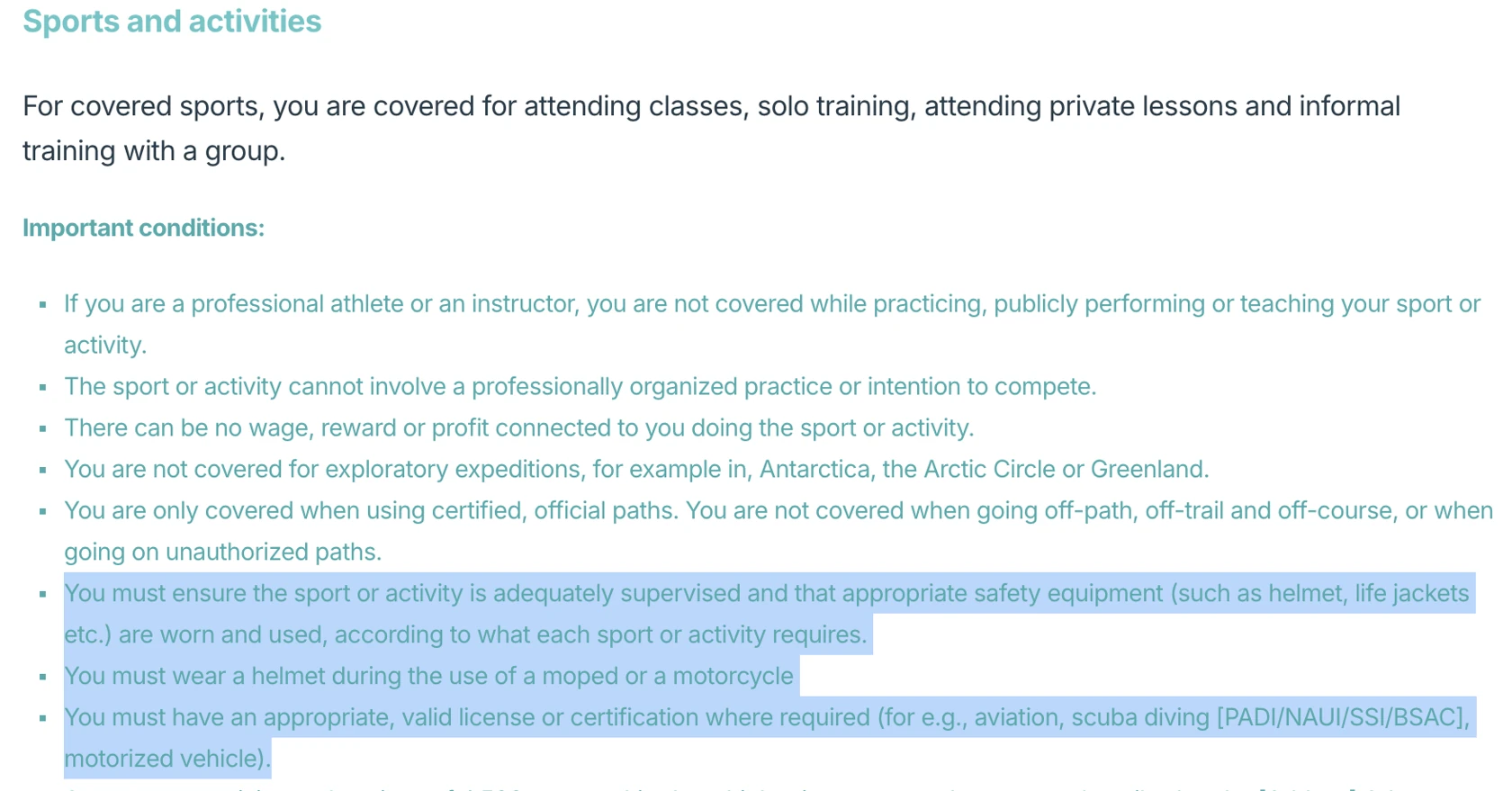
Here is the clause that ruins trips: standard travel insurance policies exclude motorcycle and scooter accidents unless you hold a motorcycle licence valid for the vehicle, and many exclude two-wheelers outright. Thailand’s rental scooters are handed to anyone with a passport; the insurance covering the person renting them mostly is not. With road accidents the leading cause of serious tourist injury in Thailand, the sequence writes itself: rent scooter, crash, discover the exclusion, meet a hospital bill with no ceiling.
The fix is boring and absolute: read your policy’s riding clause before renting, carry the licence your policy demands or do not ride, and wear the helmet regardless of what the locals do. Which policies handle riding honestly, and what else Thailand-bound cover should include, is the insurance hub’s core material.
The VPN, and Thai internet reality
Thai internet is open for everything a visitor plausibly needs; the occasional political-content block will not affect your trip. The VPN case is the standard traveller’s set: home streaming catalogues back (the how), banking apps that flinch at Thai IPs, and hygiene on guesthouse wifi that has not seen a firmware update since installation, the exact scenario in our hotel wifi threat model. Any provider from the travel VPN ranking has fast Bangkok and Singapore servers nearby.
The apps that run a Thailand trip
Grab is the one non-negotiable: rides at honest prices, food delivery, and the end of taxi-meter negotiations. Register at home with your foreign number and add the travel card before flying, because verification codes mid-airport are nobody’s favourite genre. Bolt runs cheaper in several cities and makes a worthy backup. Google Maps handles Thai addresses better than it used to but still benefits from the offline download for islands and the north; Google Translate with Thai downloaded turns market menus and pharmacy labels legible via the camera.
Two Thailand-specific notes. Many services assume LINE rather than WhatsApp: hotels, drivers and tour operators will offer a LINE ID, and having the app installed smooths more logistics than seems plausible until you are there. And 7-Eleven’s ubiquity makes its app tempting, but like Japan’s domestic payment apps it wants local credentials; the card-plus-cash arrangement above covers a visitor’s actual needs without the registration wall.
The pre-departure list, Thailand edition
| Before you fly | Details |
|---|---|
| Install an AIS-riding eSIM, leave it off | Thailand eSIM guide |
| Sort the travel card + plan big withdrawals | The 220-baht fee is per visit: money hub |
| Check the scooter clause in your policy | Licence requirement, or do not ride |
| VPN installed, bank login tested through it | Ranking + banking playbook |
| Download offline maps for island/rural legs | Even AIS has gaps between towers |
Thailand punishes almost no mistakes, which is why the three it does punish, the ATM toll, the wrong network on an island, and the scooter clause, are worth the twenty minutes this page just cost you. The destination-agnostic version of the setup lives at the travel tech stack.
FAQ
Cards or cash in Thailand?
Bangkok malls and hotel bills take cards without drama; street food, taxis and islands remain cash country. Most ATMs charge a fixed 220-baht foreign-card fee, so a few large withdrawals beat many small ones.
Is Grab better than taxis and tuk-tuks?
For visitors, mostly yes: app pricing kills the negotiation and the scenic-route detours. It runs on data, which is the quiet reason connectivity on landing is a Thailand essential.
Do I need a special license to rent a scooter in Thailand?
Legally you need a motorcycle-class licence, plus an IDP for foreign licences, and riding without one can invalidate your travel insurance, a point the UK FCDO’s Thailand advisory makes explicitly. The rental shop accepting your car licence changes nothing at claim time.