

Home»Insurance»The scooter clause
The Scooter Clause: How Travellers Void Their Insurance in One Rental
By  Ignas Simkus|Last updated: 31 August 2026|How we test
The most expensive sentence in Southeast Asia is ‘it’s just a scooter’. Rent one without a motorcycle license and most policies quietly stop covering the most likely accident of your trip, a fact travellers discover in a Thai hospital corridor. We’ve read the clauses; here is exactly how to not be that story.
Article Summary
- The clause: cover requires being licensed for the vehicle in your home country, a car license is not a motorcycle license
- Where it bites: Thailand, Bali, Vietnam, scooter country, tourist-accident country
- Three real fixes: get the license, choose Genki (≤125cc without one), or don’t ride
- The helmet line: no helmet, no claim, even where locals skip them
The clause, verbatim logic
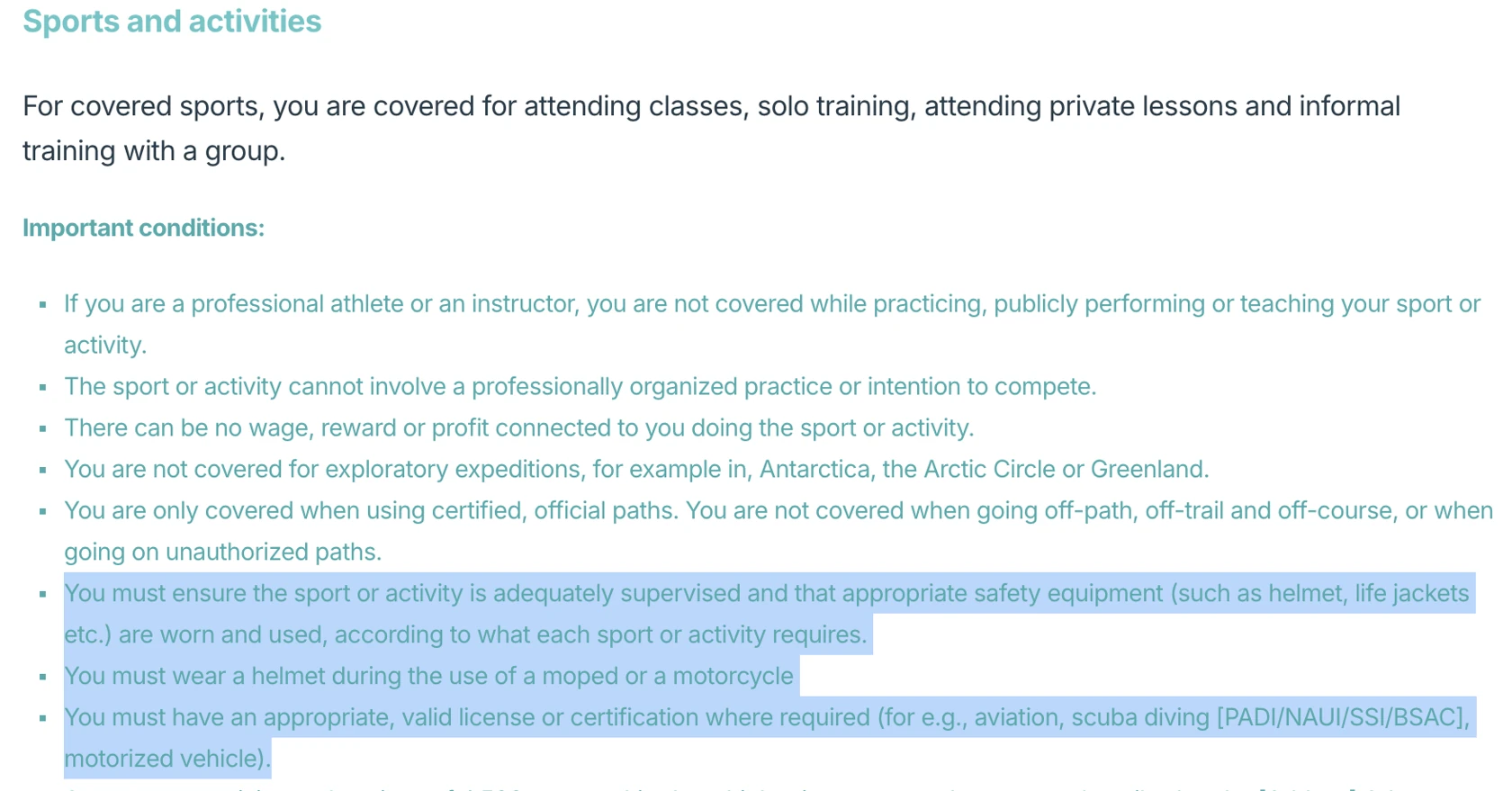
Nearly every policy wording carries the same conditions we verified across providers: motorbike/scooter accidents are covered only if you hold a valid license for that vehicle class, are wearing a helmet, and aren’t racing. The trap is the class: your car license does not license a 125cc scooter in your insurer’s eyes, whatever the rental shop accepts, and roughly 90% of standard policies exclude scooters entirely or via exactly this mechanism. An International Driving Permit only certifies licenses you already hold; it manufactures nothing.
How the products we cover actually treat two wheels, from their current published terms:
| Provider (July 2026 terms) | Scooter cover requires | The catch |
|---|---|---|
| SafetyWing Nomad Essential | Licence for the vehicle class + helmet, no racing | Your medical only; no liability for the person you hit |
| Heymondo | Licence for the class + helmet (orthodox wording) | Adventure add-on for anything beyond street riding |
| Genki Traveler | Nothing up to 125cc / 11 kW / 110 km/h; helmet for the rider | The only no-licence cover in our set (their own wording); racing and off-road excluded |
| World Nomads | Licence valid for the bike, home and destination rules both | Bigger engines only on the higher tier |
Why this clause owns Southeast Asia
Scooters are the default transport of the places this site loves, and road accidents are the leading cause of serious tourist injury in Thailand, Bali and Vietnam. The combination is brutal: the most likely serious accident of the trip is the one most policies exclude for most riders. Our Thailand guide calls it the fine print that matters more than every fee combined; a hospital bill for a bad scooter crash runs five figures before evacuation enters the maths. The advisories agree: the UK FCDO’s Thailand page notes the WHO ranks the country among the world’s deadliest for motorcycle fatalities, and its Indonesia page flags “a large increase in moped and motorbike accidents”, some fatal, in Bali.
The country reality, advisory by advisory
Thailand: the UK FCDO advisory quotes the WHO ranking of Thailand among the world’s deadliest countries for motorcycle riders, and states plainly that riding unlicensed can invalidate travel insurance. Indonesia: the same advisories flag the rise in moped accidents in Bali, where the gap between what rental shops accept (anything) and what insurers require (a motorcycle licence) is the whole trap. Vietnam: foreign licences occupy a legal grey zone all of their own, and plenty of Ha Giang loop riders are uninsured without knowing it. Three countries, one pattern: the rental counter is not the insurance counter, and only one of them shows up at the hospital.
The three honest fixes
- Get the motorcycle license. The only fix that works everywhere: a home-country motorcycle license (plus IDP endorsement where required) makes you actually covered on standard policies, SafetyWing’s conditions, for instance, then cover ≤125cc rentals cleanly.
- Choose cover built for the reality. Genki stands alone here: it covers light motorcycles up to 125cc / 11 kW (top speed 110 km/h) without requiring a motorcycle licence, helmet on for the rider, the single feature that makes it the honest recommendation for the unlicensed majority. World Nomads’ Explorer tier covers bigger bikes with the right license.
- Don’t ride. Grab and taxis cost less than one deductible; unpopular advice, unbeatable actuarial logic.
If you ride anyway (most of you will)
Helmet always, the clause is binary and blood-alcohol’s twin: no helmet, no claim, even where locals treat them as decoration. Zero alcohol, same binary. Photograph the rental’s existing damage before touching it (a different, smaller dispute, but the same phone habit). And carry your license physically; post-accident is a documents game, and our hub’s claims advice applies double when the first question is “may we see your license?”
The wider lesson
The scooter clause is the sharpest instance of the rule that governs this whole vertical: policies pay for the risks you matched, not the ones you assumed. Five minutes with the exclusions, the reading habit from our what-insurance-covers guide, costs nothing and reprices the entire trip. The scooter is optional. Knowing whether you’re covered on it is not.
FAQ
Does my car license cover a 125cc scooter abroad?
For insurers, generally no: policies key on holding a licence for that vehicle class, and an International Driving Permit only certifies what you already hold. A rental shop accepting your car licence is commerce, not coverage.
What happens if I crash an uninsured rental scooter?
You pay for everything: the hospital, the bike, and in the bad scenarios the other party. Southeast Asian private hospitals want payment guarantees before serious treatment, and five figures before evacuation is the honest arithmetic.
Are quad bikes and dirt bikes treated like scooters?
Usually worse. Named exclusion lists frequently ban quads and motorised dirt bikes outright even where street scooters squeak through with a licence. Anything off-road deserves a read of the policy text, not an assumption.