


Home»Insurance»Long-stay travel insurance
Best Long-Stay Travel Insurance (2026): 90 Days and Beyond
By  Ignas Simkus|Last updated: 20 September 2026|How we test
Almost every travel policy is designed around a return ticket. Book a one-way flight and the fine print starts working against you: annual plans cap each trip, and most single-trip cover cannot be started or stretched from the road. Three products are built for the other kind of trip. Here is how they differ, with the numbers dated.
Article Summary
- Best overall: SafetyWing, a subscription that renews every 4 weeks until you cancel it
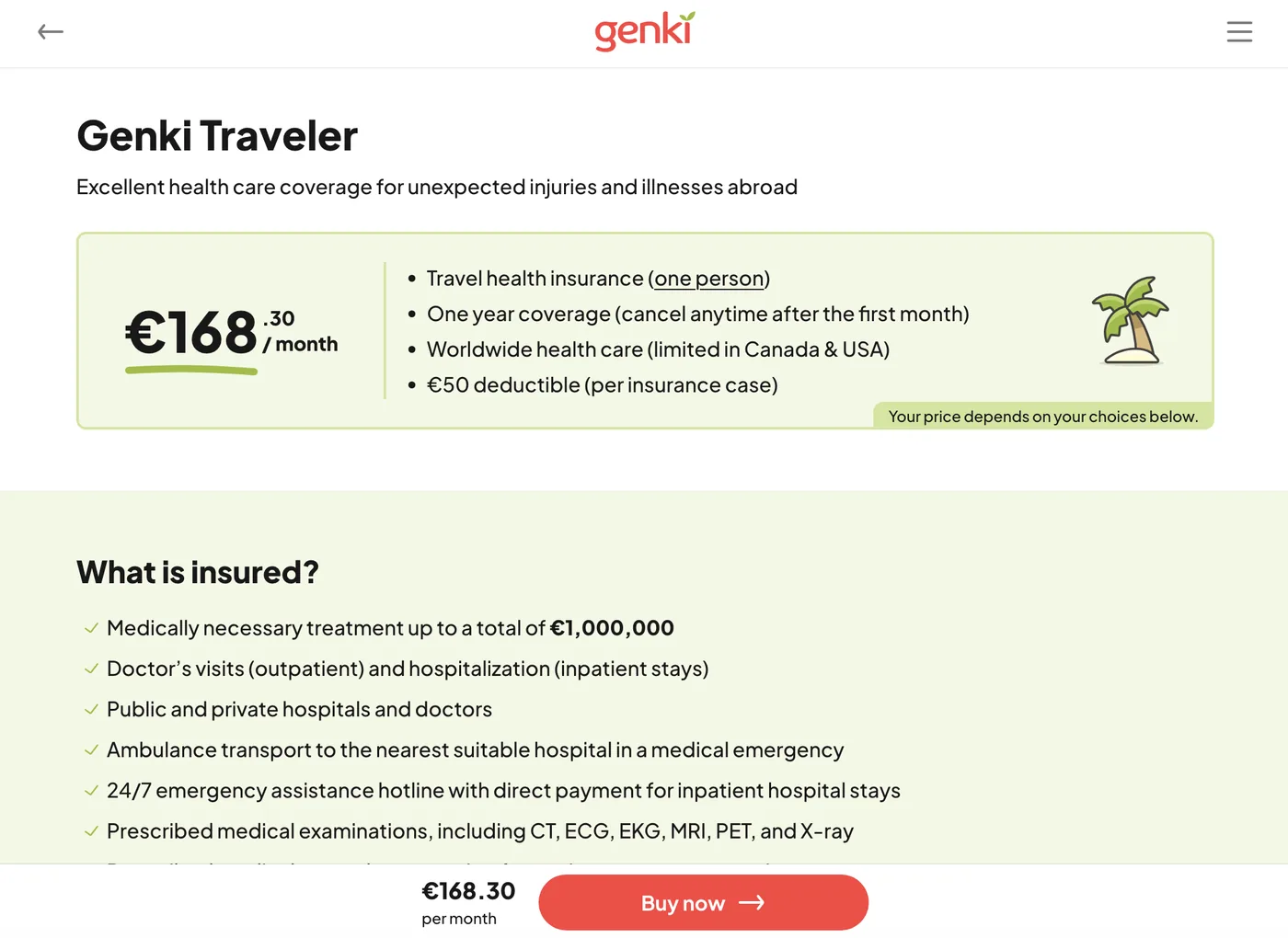
- Best health-first: Genki Traveler, €1M medical cover on a monthly plan
- Biggest ceilings: Heymondo Long Stay, $2.5M emergency medical from 90 days up, renewable in blocks
- The catch: buy from the road and waiting periods apply, and Genki hard-stops at 12 months
Where normal policies stop
The trip-length cap is the least advertised number in travel insurance. Allianz, as mainstream as insurers get, states it plainly on its own plan comparison page: annual plans cover trips up to 45 or 90 days depending on tier, and even its single-trip OneTrip range tops out between 120 and 365 days depending on plan (September 2026). The UK Foreign Office makes the same warning in its official insurance guidance: “many policies have a maximum trip length”, and long trips need purpose-built long-stay cover. The cap is not malice. Per-trip pricing assumes a defined trip, and a one-way ticket breaks the actuarial model.
I buy insurance per trip, and the length cap is the first thing I check before anything else in the wording, because my winter escapes run two or three months and a 45-day annual policy quietly stops mattering halfway through. Past 90 days you are shopping in a different aisle: subscriptions and long-stay products. What the cover itself does and does not pay for is its own subject, and our guide to what travel insurance actually covers handles that. This page is about the three products that stay alive past day 90.
The three shapes of long-stay cover
Every credible option for 90+ day travel takes one of three forms:
- The subscription: SafetyWing Nomad Insurance renews every 4 weeks like a phone contract, with no end date. You stop paying when you stop travelling.
- The health-first monthly plan: Genki Traveler is closer to health insurance worn as travel cover. Higher medical ceiling, monthly billing, and nothing for bags or cancelled flights.
- The stretched per-trip policy: Heymondo Long Stay keeps the classic model, a policy with dates on it, but sells a minimum of 90 days and renews in blocks for as long as you keep extending; no cap is published.
SafetyWing
The default for open-ended travel: starts mid-trip, renews on its own, cancels in a click.
Genki Traveler
€1M medical limit and a small per-case deductible, for travellers who care about hospitals, not luggage.
Heymondo Long Stay
$2.5M emergency medical plus trip-protection extras the other two skip.
Side by side (September 2026)
| Product | Price | Medical limit | Maximum length | Start mid-trip? |
|---|---|---|---|---|
| SafetyWing Essential | $62.72 per 4 weeks, ages 18-39 (age-banded) | $250,000 overall, $250 deductible | None: rolling subscription | Yes, at any point |
| Genki Traveler | Quoted per age and region; billed monthly (Sept 2026 Spain quotes: €63.90 at 30, €79.80 at 45, €168.30 at 60) | €1,000,000, €50 per case (no deductible inpatient) | 12 months, hard stop | Yes, with a 14-day wait if you were uninsured abroad |
| Heymondo Long Stay | Quoted from trip dates, age and destination; renewal prices shown upfront | $2.5M emergency medical | Renews in blocks, 90-day minimum; no published cap | Yes, with a 72-hour wait |
Prices and policy terms last verified September 2026.
Read the table as a ladder of ceilings. SafetyWing lists Essential at $62.72 per 4 weeks for the 18 to 39 band on its pricing page (September 2026), and its Description of Coverage caps the policy at $250,000 overall with $100,000 for evacuation. Genki quadruples that medical ceiling but drops baggage and cancellation cover entirely, and it publishes no list price: the quote moves with your age and region, so run it against SafetyWing’s flat band. My own September 2026 quotes, with Spain as the region, put Traveler at €63.90 a month at 30, €79.80 at 45 and €168.30 at 60. Run yours before assuming either one is cheaper. Heymondo’s Long Stay plan page lists $2.5 million in emergency medical (September 2026), the kind of number that stops mattering because nothing you hit will exceed it, and keeps the trip-protection extras. Decide which risks deserve your money first; a price comparison only makes sense between products that cover the same ones.
Buying cover when you are already gone
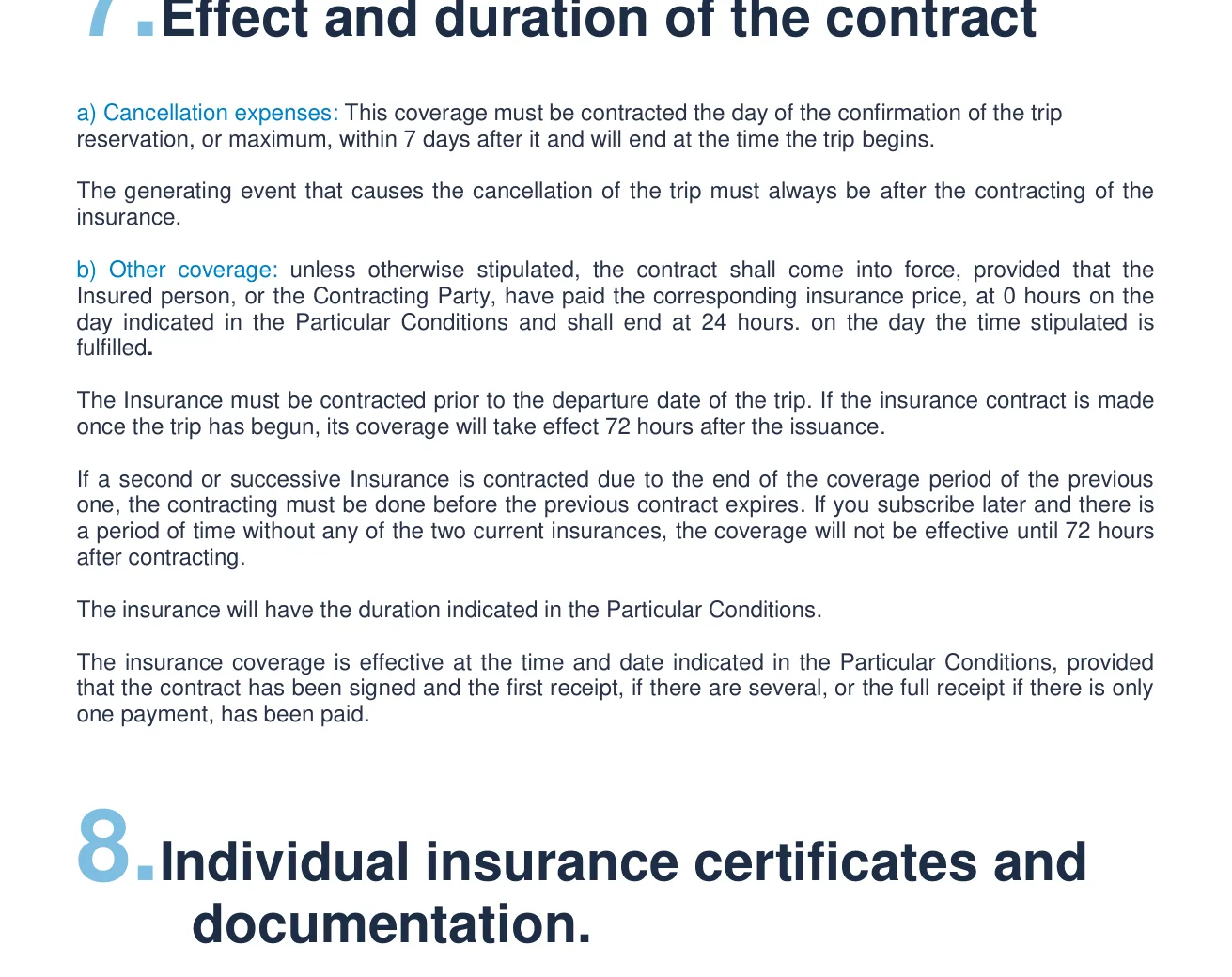
All three sell to travellers who left home months ago. The mechanics differ, and the differences are waiting periods. SafetyWing was built for this case: its site invites signup “at any point during your travels”, with cover running from the start date you pick. Heymondo applies a 72-hour waiting period when you buy after departure, per its own help desk. Genki is the strictest: buy it abroad with no prior insurance in place and only emergencies are covered for the first 14 days.
Buy before wheels-up anyway. Waiting periods exist because insurers will not sell fire cover on a burning house. Mid-trip purchase is there to rescue a lapse, and three uninsured days after a crash is exactly the gap these products are supposed to close.
Flying home without breaking cover
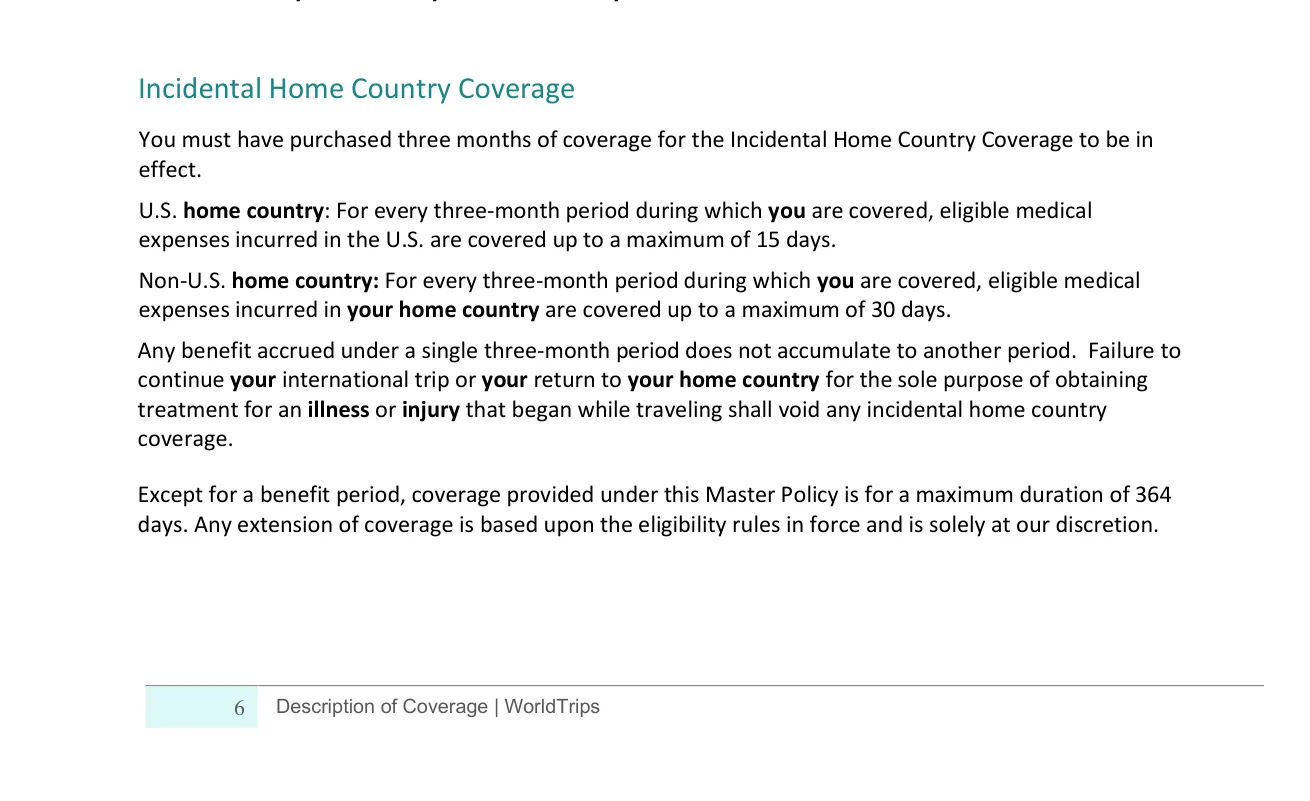
Long trips include home visits: a wedding, a visa run, a week of missing your own bed. Standard policies treat coming home as the end of the trip. SafetyWing writes the allowance into the product instead. Essential includes up to 30 days of incidental home-country cover per every 3 months of coverage, trimmed to 15 days when your home country is the US, per the Description of Coverage. That is the clause that lets a nomad attend a funeral without re-underwriting their whole year. Genki and Heymondo publish no equivalent headline allowance, so before booking a flight home mid-policy, ask their support in writing what happens to your cover while you are there. An answer in your inbox beats a paraphrase from a chat agent.
Renewals, and where each one hard-stops
SafetyWing keeps charging every 4 weeks until you cancel, and offers a 364-day prepay at 10% off if you already know the trip is long. Genki Traveler bills monthly with a one-month minimum, then hits a wall at 12 months: the product does not extend past a year, full stop. Heymondo Long Stay starts at 90 days and renews in blocks sold in 30-to-275-day chunks, with no published cap; its own page says to renew it whenever and however you like. Two practical notes on renewal. A renewal is usually seamless for cover, but a brand-new policy after a hard stop resets pre-existing-condition clocks, so plan the transition before month 11, not during month 12. And exclusions travel with you across every renewal: the licence-and-helmet logic our scooter clause guide dissects applies for the full year, though the details differ per product. Genki, unusually, covers light motorcycles up to 125cc without requiring a licence, per its help docs, where SafetyWing demands you be licensed for the class.
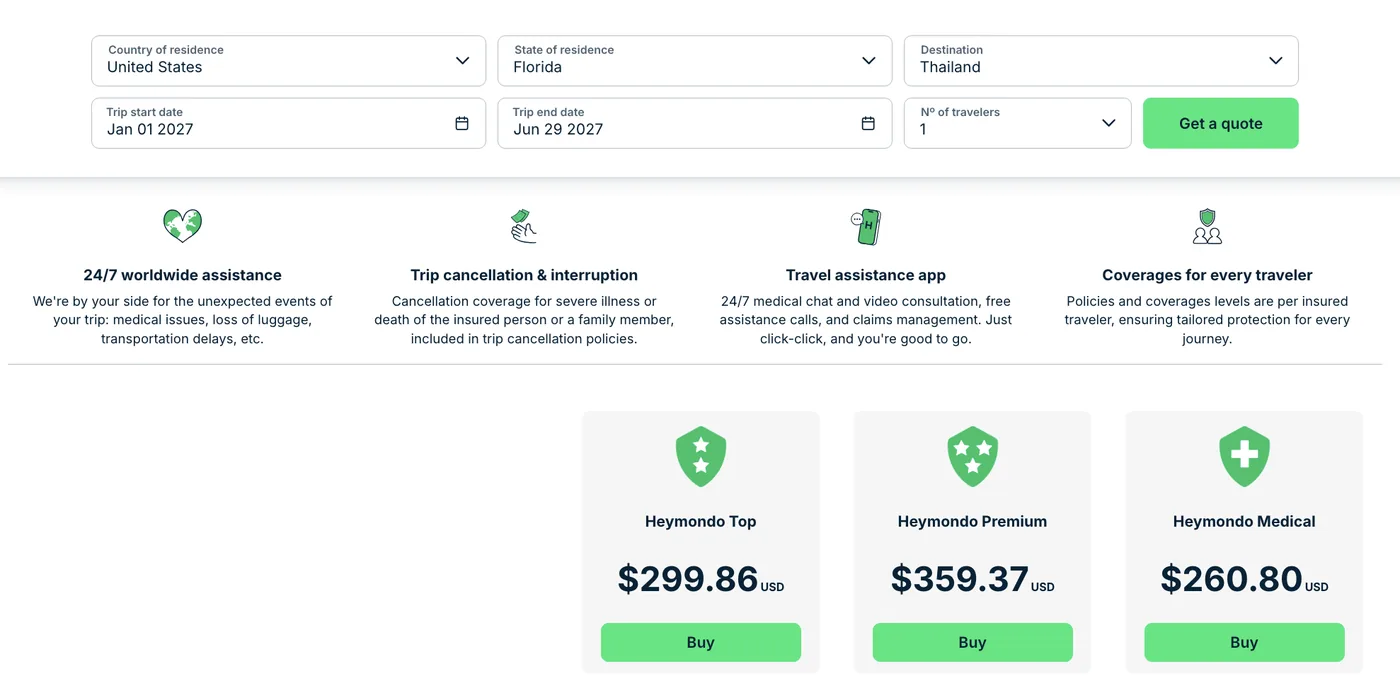
And one US-specific wrinkle from my own quote run in September 2026: when I asked Heymondo’s engine for a Florida resident, Thailand, 1 January to 29 June 2027, it never offered Long Stay at all. It priced the ordinary single-trip tiers for the full 180 days, $260.80 for Medical, $299.86 for Top and $359.37 for Premium, carrying the US-issued ceilings of $100,000 to $200,000 rather than the $2.5 million discussed above. Cheap per month, but a different product. Which shelf you are shown depends on where you live, so check the product name on your own quote before comparing it to anything on this page.
Which one I would buy
Scenario, then product. This is the short list I would hand you at the gate:
- Open-ended trip, no return date: SafetyWing. The rolling subscription is the only shape that matches not knowing when you are done, and the $250,000 ceiling is a fair trade for the cheapest credible floor. The full wording is unpacked in our SafetyWing review.
- Slow travel where health is the whole concern: Genki Traveler. If your bag is insured by not caring about it and your flights are one-ways bought weekly, paying for medical depth instead of trip extras is the rational split.
- A defined 3 to 12 month trip you saved for: Heymondo Long Stay. Fixed dates, the biggest medical number of the three, and cancellation cover that matters when the trip itself was expensive. Our Heymondo review covers the per-trip versions too.
- Trips under 90 days: none of these. A normal single-trip policy prices shorter trips better, and the long-stay premium buys you nothing.
FAQ
Is long-stay travel insurance the same as expat health insurance?
No. Long-stay travel cover is emergency-first: it pays when something goes wrong during a trip of up to about a year, and it assumes you still have a home country to return to. Expat and international health insurance covers routine care and ongoing treatment for people who have relocated. Products like Genki’s Native tier and SafetyWing’s Complete plan sit in that second lane. If you are registering residency somewhere, you have outgrown this page.
Can I get cover if I have already been travelling for months?
Yes, and that is half the point of these products. SafetyWing sells mid-trip as a designed feature. With Heymondo you wait 72 hours from purchase before cover starts, and Genki restricts you to emergencies for the first 14 days if you arrive uninsured. Expect no cover for anything that happened before the policy started: a mid-trip purchase insures the rest of the trip, never the part that already went wrong.
What happens when I hit a 12-month maximum?
Genki Traveler ends at 12 months with no extension; Heymondo publishes no renewal cap for Long Stay, so the practical ceiling is how long it keeps quoting renewals. At that point you either start a fresh policy, which resets pre-existing-condition assessments, or you accept that a trip past a year is edging into expat territory and shop accordingly. SafetyWing avoids the cliff entirely: the subscription keeps renewing every 4 weeks for as long as you keep paying.