


Home»eSIM»Best eSIM for the USA
Best eSIM for the USA (2026): A Visitor’s Guide
By  Ignas Simkus|Last updated: 22 July 2026|How we test
Visiting the US, your eSIM will ride T-Mobile or AT&T, because that is what nearly every travel provider resells there, a market I cross into regularly on transatlantic runs. Which of the two fits depends on one question: are you staying in cities, or driving between them?
Article Summary
The US network landscape for visitors
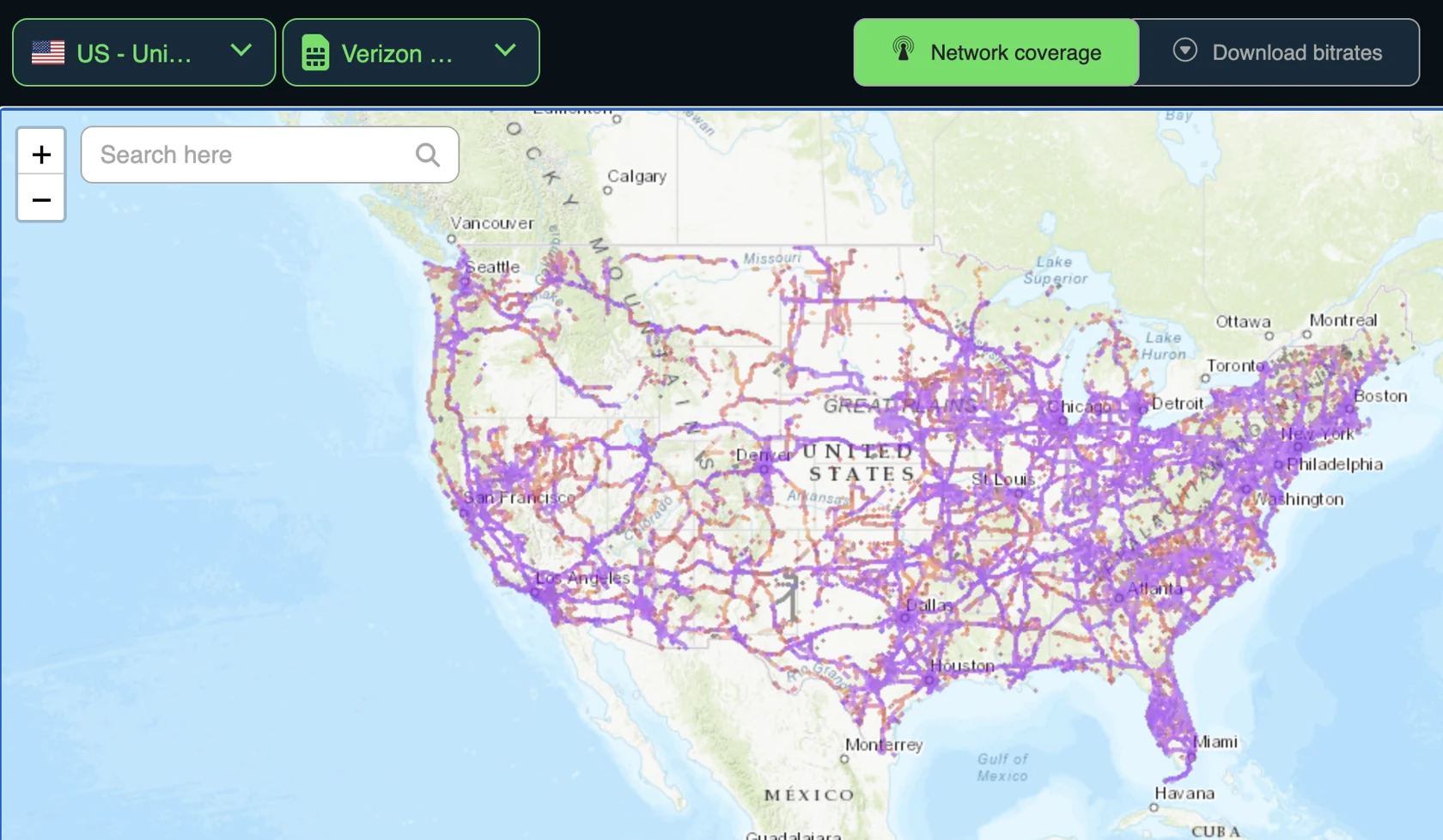
Three networks run the country: Verizon, AT&T and T-Mobile. Travel eSIMs mostly resell the latter two: T-Mobile’s mid-band 5G is the fastest widely deployed network in urban America and the default ride for most travel eSIMs, while AT&T’s footprint is broader across rural interstates and small towns, which matters the moment your itinerary includes the word “drive”.
The 2026 exception worth knowing: Verizon is no longer off the table. Visible, Verizon’s own budget brand, sells a Travel Pass eSIM that puts visitors on the Verizon network, 5G Ultra Wideband included, the same infrastructure its domestic customers use. For itineraries deep into rural America, where Verizon’s coverage map has historically been the strongest of the three, it is the option this page could not offer a year ago. Benchmarked, not a partner; check the current terms directly.
The practical translation: a New York, Chicago, LA and Miami itinerary will not notice the difference. A Southwest parks loop or a Route 66 stretch will, and it will notice in AT&T’s favour. The plan page names the network, the same sixty-second check our travel eSIM guide makes the centre of every decision.
The picks, by itinerary
Airalo
Mature US plans, painless setup, top-ups that work at a rest stop. Check whether your specific plan rides T-Mobile or AT&T and match it to the itinerary. Background in our Airalo review.
Saily
Clean setup, competitive US pricing, and the built-in tracker blocking is pleasant on a month of hotel and airport wifi. Details in the Saily review.
Data amounts: America eats plans
Budget more data than you would for Europe. Distances mean navigation runs for hours, cities mean rideshare apps all day, and US wifi is less ubiquitous than its reputation: hotel wifi is fine, but the cafe-wifi culture thins outside big metros. A two-week visit with a road-trip leg comfortably clears 15 GB; unlimited plans earn their premium here more often than in most countries, with the usual daily-cap asterisk explained in our unlimited comparison.
One US-specific footnote: coverage maps are honest about cities and optimistic about wilderness. Death Valley, big stretches of Utah, and the interiors of most national parks have no usable signal on any carrier, an FCC-documented reality no eSIM fixes. Download offline maps for any park day; it is the difference between a view and a problem.
Roaming vs eSIM for the US specifically
US roaming through a home carrier is the classic bill-shock destination: legacy pay-per-MB rates from European and Asian carriers still exist, and even the flat-rate daily passes stack up fast on a two-week trip. The math lands where it usually lands, an eSIM at a fraction of the daily-pass cost, worked through in the cost comparison. The exception: some carriers’ premium plans now bundle genuine US roaming allowances, so read your own plan before buying anything.
Setup, the short version
Install at home, before the flight: the standard walkthroughs for iPhone and Android cover it in five minutes. Landing routine: travel line on, set as data line, roaming on. US immigration halls have famously bad reception, so if nothing connects at the gate, walk to baggage claim before assuming anything is broken; after that, the fix checklist takes over.
FAQ
Do US eSIMs include calls and texts?
Usually not: travel eSIMs are data-only, and that is fine, because US life runs on data anyway. iMessage, WhatsApp and FaceTime handle the personal side; restaurant waits and deliveries increasingly use web links. The one gap is legacy voice menus (some pharmacies, some banks); keep your home SIM active for those rare calls, the dual-SIM arrangement the install guide sets up.
Will 5G actually matter?
Yes, unusually for travel. US cities have wide mid-band 5G, and the speed difference against congested 4G in Manhattan or downtown SF is dramatic. Check that your plan includes 5G rather than capping you at LTE; providers differ on this per plan.
Hotel and cafe wifi is everywhere, why buy data at all?
Because the US is a between-places country: rideshares, navigation, mobile boarding passes, and parking apps all happen outside wifi range. And the wifi you do find deserves the standard skepticism covered in our public-wifi threat model.
Can I hotspot the family’s devices?
On fixed-data plans, generally yes at full speed, which is another argument for the big pack over unlimited-with-a-hotspot-cap. A 20 GB plan tethering two kids’ tablets on a road trip works; an unlimited plan throttling the hotspot at 500 MB does not.
Do US eSIMs cover Hawaii and Alaska?
The mainstream plans ride the big national networks, which cover both states’ populated areas properly; wilderness is wilderness. Highways yes, backcountry no, same as for Americans.
Will my eSIM work for Uber and Apple Pay in the US?
Yes, data is data: Uber, Lyft, maps and tap-to-pay run normally. What surprises visitors is the urban dead spots, subway platforms and thick-walled buildings, which locals simply accept as weather.
Does my WhatsApp number change on a US eSIM?
No. WhatsApp stays bound to your home number as long as that SIM remains in the phone, active or not. The US eSIM only carries data; nothing about your identity moves.